

Traveling messes with your sleep. A new environment, city noise, time zone shifts, and the mental buzz of being away all make it harder to fall asleep and stay asleep. The good news: a few simple habits make a real difference.
Everything you need to sleep better on the road
😴 💤 🛏️
What are the best tips to improve sleep while traveling?
The short answer: stick to a consistent bedtime, block out light and noise, skip the nightcap, keep your room cool, and move your body during the day. These are the five habits that make the biggest difference for any sleep traveler, whatever your destination or accommodation type.
#1 Block out light wherever you are
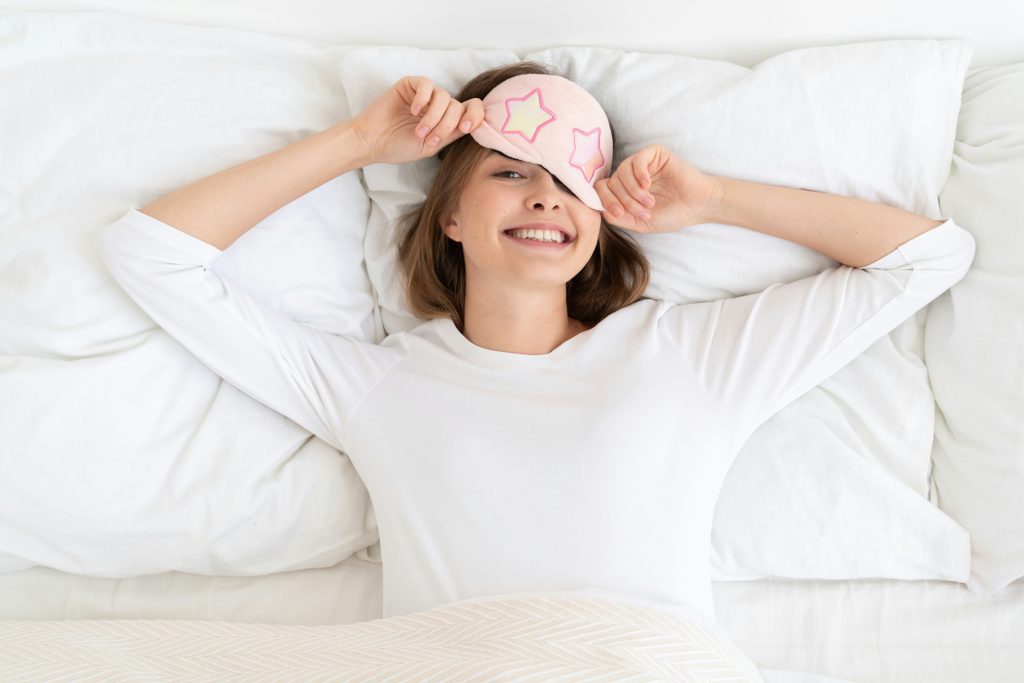
Light is one of the biggest disruptors of sleep for any traveler. Hotel blackout curtains are great when they work, but they often leave a gap. A sleep mask solves that instantly. It’s compact, it’s cheap, and it works anywhere, whether you’re in a dorm, a private room, or on an overnight train. It also helps significantly when you’re crossing time zones and trying to reset your body clock.
#2 Bring earplugs or use a white noise app
Hotel corridors, city streets, and fellow guests are unpredictable. A good pair of foam earplugs is one of the cheapest and most effective tools any sleep traveler can carry.
If earplugs aren’t your thing, try a white noise app on your phone. It masks ambient sound so your brain stops trying to process every footstep or tram passing outside. A few free options work well, and you likely already have your phone on your nightstand anyway.
#3 Recreate your wind-down routine
Your body responds to familiar signals. If you have a routine at home, stick to it on the road. Even small rituals tell your nervous system it’s time to slow down. Here are a few good options that travel well:
- Herbal tea: Pack a chamomile or valerian tea bag. A warm drink before bed is a well-established sleep cue.
- A physical book: Screens stimulate your brain. A few pages of a novel do the opposite.
- Stretching or light breathing: Even five minutes of gentle movement helps your body shift gears.
- Phone face-down across the room: If you use your phone as an alarm, put it away. Out of reach means out of mind.
#4 Get the room temperature right
A slightly cool room promotes deeper sleep. If your room has air conditioning or a thermostat, aim for around 18-20°C (64-68°F). If you tend to run warm, request an extra blanket so you can adjust during the night rather than waking up overheated.
#5 Skip the nightcap
It’s tempting after a long travel day, but alcohol disrupts your sleep cycle in the second half of the night. You may fall asleep quickly, but you’ll likely wake up unrested. If you want a drink, keep it earlier in the evening and give your body time to process it before you turn in.
#6 Move your body during the day
Even a 20-minute walk helps regulate your circadian rhythm and builds up the sleep pressure that makes falling asleep easier at night. Exploring a new city on foot counts. So does a quick session in the hotel gym, if there is one. The key is simply moving before the sun goes down.
#7 Give yourself time to adjust, especially on night one
The first night in a new place is almost always the hardest. Researchers call it the “first night effect“: your brain stays in a lighter sleep state, keeping watch in an unfamiliar environment. Knowing this helps. If you sleep poorly on night one, that doesn’t mean the rest of your trip will be the same. Night two is almost always better.
What is the 10-3-2-1-0 sleep rule?
The 10-3-2-1-0 rule is a straightforward framework for good sleep hygiene. It gives you a countdown to a better night’s rest, starting 10 hours before bed and ending the moment your alarm goes off. Here’s how it works:
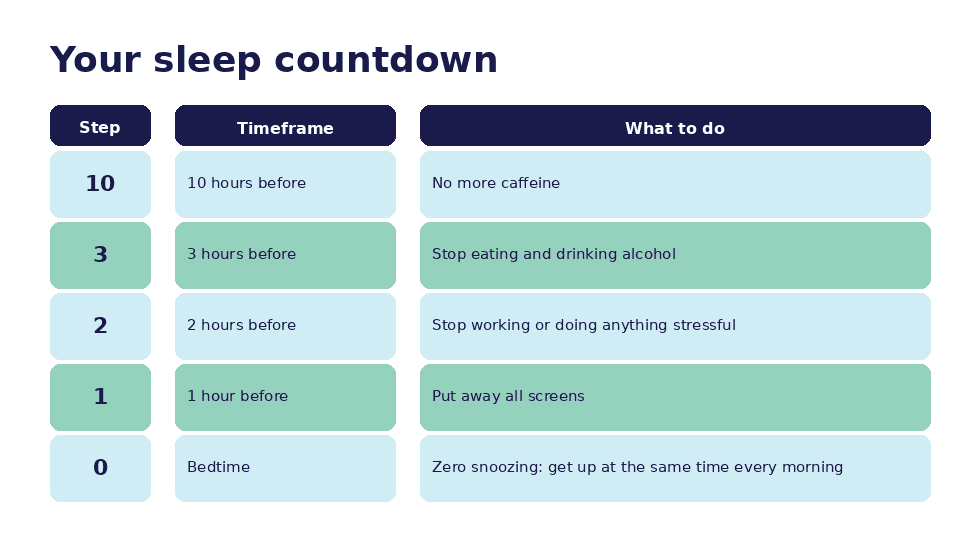
Applied while traveling, this rule is especially useful when you’re dealing with jet lag, late arrivals, or a packed itinerary that makes it tempting to scroll your phone until midnight. Following even three or four of these steps makes a measurable difference.
What is good sleep hygiene, and why does it matter for travelers?
Good sleep hygiene is the set of habits and environmental conditions that support consistent, quality sleep. It matters for everyone, but it matters even more when you’re traveling, because your usual environment and cues are gone.
The core principles of good sleep hygiene include:
- Going to bed and waking up at the same time, even on trips
- Keeping your room dark, cool, and quiet
- Avoiding caffeine after mid-afternoon
- Limiting screen time in the hour before bed
- Not using your bed for work or watching videos
When you’re in a new city, you won’t always control every factor. But even applying two or three of these consistently shifts things in your favor.
How to fall asleep when you can’t: practical techniques that actually work
You’ve done everything right. Room is cool, phone is away, earplugs in, and you’re still staring at the ceiling. Here’s what to try:
The 4-7-8 breathing method
Inhale for 4 seconds, hold for 7, exhale for 8. Repeat four times. It activates your parasympathetic nervous system and physically slows your heart rate.
Progressive muscle relaxation
Starting at your feet, tense each muscle group for five seconds, then release. Work your way up to your shoulders. By the time you reach your head, most people are nearly asleep.
Mental noting
If your mind is racing, try naming what you’re thinking without engaging with it. “Planning. Worry. Memory.” It creates distance from the thought and reduces the spiral.
Get up briefly if needed
If you’ve been lying awake for more than 20 minutes, get up, do something calm and boring in low light, then return when you feel sleepy again. Lying awake frustrated trains your brain to associate the bed with alertness.
How to get to sleep faster on the road: a quick-start checklist
If you want one thing to keep in your back pocket for every hotel check-in, this is it:
- Set the thermostat or AC to 18-20°C
- Close all curtain gaps or put on your sleep mask
- Put in earplugs or start a white noise app
- Put your phone on the far side of the room
- Do five minutes of slow breathing or stretching
- Read a few pages of your book
That’s your pre-sleep setup done in under 10 minutes. The first time you do it, it feels like effort. By night three, it’s automatic.


Tips to improve sleep while traveling: FAQs
What are 5 tips for better sleep?
The five habits that consistently make the biggest difference are: blocking out light with blackout curtains or a sleep mask, using earplugs or white noise to manage sound, keeping your room cool (around 18-20°C), avoiding screens and alcohol before bed, and sticking to a consistent wake-up time even when traveling. Together, these form the foundation of good sleep hygiene on the road.
What is the 10-3-2-1-0 sleep rule?
The 10-3-2-1-0 sleep rule is a countdown of habits to follow in the hours before bed. Stop caffeine 10 hours before sleep, stop eating and drinking alcohol 3 hours before, stop working 2 hours before, put away screens 1 hour before, and set a zero-snooze alarm so you wake up at a consistent time. It's one of the most practical frameworks for good sleep hygiene.
What is the best way to improve sleep?
The single biggest lever is consistency: going to bed and waking up at the same time every day, including when you travel. Beyond that, the environment matters. A cool, dark, and quiet room gives your body the right conditions to move through full sleep cycles. If you can only change one thing, fix your wake-up time first.
How do I fall asleep in a new place?
The 'first night effect' is real. Your brain stays partially alert in an unfamiliar environment. To counter it, bring familiar cues from home (a tea ritual, your own pillow, a specific playlist) and stick to your usual wind-down routine. The 4-7-8 breathing technique is also very effective for quieting the nervous system when your mind is still in travel mode.
Does alcohol help you sleep when traveling?
It feels like it does, but it actually disrupts sleep quality. Alcohol may help you fall asleep faster, but it fragments the second half of your sleep cycle, leaving you less rested in the morning. If you want a drink, finish it at least three hours before bed and follow it with water.
How do I deal with jet lag and sleep disruption?
Adjust to the local time zone as quickly as possible. Expose yourself to natural daylight in the morning, as it resets your circadian rhythm faster than anything else. Avoid napping for more than 20 minutes during the day, and stay awake until a reasonable local bedtime even if you're exhausted. Melatonin supplements can help bridge the gap on the first one to two nights.
What should I pack to sleep better while traveling?
The essentials are: foam earplugs, a sleep mask, and a herbal tea bag or two (chamomile or valerian). If you're a light sleeper, add a travel-size white noise machine or download a free app. These four items weigh almost nothing and make a big difference in any accommodation type.
Is it normal to sleep badly on the first night in a hotel?
Yes, completely normal. Researchers have documented this as the 'first night effect': your brain runs in a lighter sleep mode in a new environment, staying alert to potential threats. It's an evolutionary response. The good news is that night two is almost always significantly better, so don't write off your whole trip based on the first night.
How does room temperature affect sleep quality?
Body temperature naturally drops slightly as you fall asleep, and a cooler room supports that process. The optimal sleep temperature for most people is between 18 and 20°C (64-68°F). A room that's too warm tends to cause more nighttime waking and lighter sleep overall. Adjust the AC or thermostat when you check in. It's one of the fastest wins.
Can exercise help you sleep better when traveling?
Yes, even light physical activity helps. Walking builds up 'sleep pressure', the biological drive to sleep, and helps regulate your circadian rhythm. A 20-to-30-minute walk during the day is enough to notice a difference. Avoid intense exercise in the two hours before bed, as it raises your core temperature and can delay sleep onset.