

One day in Bordeaux is enough to walk the historic center, eat a canelé, choose one major afternoon attraction, and finish beside the Garonne. Keep your plan to about 9 hours and save the vineyards for another trip.
Ready to walk from Capucins to the Garonne?
Let’s go! 🎒✨
What to see in Bordeaux in one day
You can walk the morning section without doubling back, then use public transport once your feet start filing complaints.
| Time | Stop | What to do | Cost |
|---|---|---|---|
| 8:00–9:00 | Marché des Capucins | Breakfast and coffee | Free entry, food costs extra |
| 9:00–10:15 | Grosse Cloche, Saint-Pierre and Porte Cailhau | Walk through the medieval center | Free outside |
| 10:15–11:00 | Place de la Bourse and Miroir d’eau | See the riverfront landmarks | Free |
| 11:00–12:15 | Grand Théâtre and Quinconces | Cross the elegant northern center | Free outside |
| 12:15–13:30 | Saint-Pierre or Halles de Bacalan | Lunch and a canelé | Pay for food |
| 13:30–16:30 | La Cité du Vin or Bassins des Lumières | Choose one timed attraction | Paid |
| From 17:00 | Chartrons, Darwin or the quays | Add one short detour, then head to the river | Mostly free |
Start at Marché des Capucins, Bordeaux’s best-known food market. It opens early from Tuesday to Sunday and closes by mid-afternoon, so breakfast beats turning up later to find the shutters coming down. On Monday, grab breakfast near Place de la Victoire and join the route from Grosse Cloche.
Grosse Cloche served as a gate, belfry, and prison. Its bell still rings at noon on the first Sunday of each month and on six other annual dates. From Rue Saint-James, continue into Saint-Pierre, where narrow streets open onto small squares between eighteenth-century façades.

Walk through Place du Parlement, take Rue des Argentiers, and reach Porte Cailhau. The 35-meter medieval gate frames a fine view toward Pont de Pierre, though the interior keeps seasonal opening days.
Don’t build your whole schedule around going inside, cause Bordeaux has much more to offer!
Next comes Place de la Bourse. Cross to the river side of the 3,450-square-meter Miroir d’eau and turn back for the classic photograph of the façade reflected in the water. The mirror normally alternates between shallow water and mist outside winter, but maintenance takes it out of service from November into spring. But don’t worry, the square still earns the stop without the splashy bit.
Follow the quays north, then cut inland to the Grand Théâtre and finish the morning at Esplanade des Quinconces. The Monument aux Girondins brings fountains, bronze horses, and a column topped by Liberty breaking her chains.
Should I visit La Cité du Vin or Bassins des Lumières?
Choose La Cité du Vin for wine history and tasting, or Bassins des Lumières for immersive art inside a former submarine base. Don’t attempt both in one afternoon or you’ll spend more time changing transport than looking at anything.
La Cité du Vin opens daily from 10:00, apart from published holiday and annual closures. Its permanent exhibition follows wine across countries and centuries, while the Belvedere visit includes a panoramic view and a wine or non-alcoholic tasting.
Book ahead if your day falls during a weekend, school holiday, or wet-weather spell.
Eat first at Halles de Bacalan, directly opposite the museum. Its 23 traders cover bread, cheese, fish, rotisserie dishes, ice cream, tapas, and wine, so your group doesn’t need to agree on lunch (a minor miracle).
Bassins des Lumières gives you the stronger alternative if wine isn’t your thing. Moving images cover the concrete walls and water basins of the former submarine base, with the program changing by date. Reserve a timed entry because popular sessions can fill up, and bring an extra layer for the cool interior. Please note that anyone with epilepsy or photosensitivity should read the venue warning before booking.
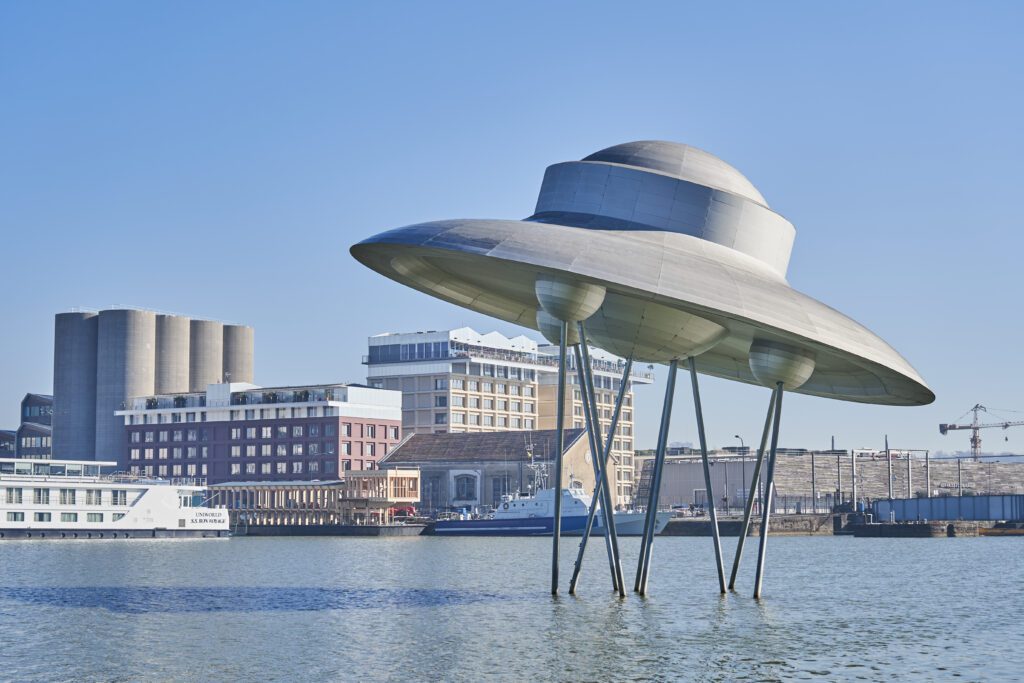
Staying near La Cité du Vin but skipping the museum? Walk to Le Vaisseau Spatial at Bassin à flot no. 1 on Quai Lawton. Suzanne Treister’s 17-meter public sculpture turns the idea of a Second World War wreck into a silver spacecraft.
Swap in shopping, Darwin or a picnic
Bordeaux’s optional stops should replace part of the plan, not pile onto it. Pick one according to the weather and what you actually enjoy doing.
- Choose Chartrons for antiques, independent shops, and wine bars. Rue Notre-Dame runs through the former wine-merchant district and feels calmer than the main shopping streets.
- Choose Rue Sainte-Catherine for major shops and a long pedestrian walk through central Bordeaux. The street measures about 1,200 meters and gets especially crowded on Saturdays and during the February and July sales.
- Choose Jardin Public for a picnic under old trees. Created in 1746, the park includes lawns, an arboretum, a pond, play areas, a carousel, and the Natural History Museum. It’s a better break than another queue when the sun’s out.
- Choose Darwin for street art, food, and Bordeaux’s alternative side. The former Niel military barracks now holds associations, businesses, workspaces, and a food venue on the right bank.
Reach Darwin by crossing the 17-arch Pont de Pierre to Place Stalingrad and following the Garonne. There’s a steep 140-meter descent from the bridge to the riverside path, so travelers with limited mobility should use public transport or keep to the accessible left-bank quays instead.
Rain changes the plan fast. Move indoors at La Cité du Vin, Bassins des Lumières, or the Grand Théâtre. Guided visits at the Grand Théâtre run Tuesday to Saturday, while Sunday and Monday closures make spontaneous door-knocking rather unsuccessful.
One day in Bordeaux: FAQs
Is one day enough to see Bordeaux?
One day is enough to see Bordeaux’s historic center, riverfront, local food, and one major afternoon attraction. Keep the route to about 9 hours and choose either La Cité du Vin or Bassins des Lumières. Save Saint-Émilion and full vineyard visits for a longer stay.
What should I do in Bordeaux in one day?
A good one-day Bordeaux plan starts at Marché des Capucins, then crosses Grosse Cloche, Saint-Pierre, Porte Cailhau, Place de la Bourse, and the quays. After lunch, choose La Cité du Vin or Bassins des Lumières. Finish beside the Garonne or with an aperitif in Saint-Pierre.
What is the best walking route through Bordeaux?
The best walking route through Bordeaux runs from Saint-Pierre and Place du Parlement along Rue des Argentiers to Porte Cailhau. Continue to Place de la Bourse and the Miroir d’eau, then follow the quays to Pont de Pierre. You’ll see the central landmarks without doubling back.
Can I visit the main Bordeaux sights without using public transport?
You can visit Bordeaux’s main central sights without using public transport. Grand Théâtre, Grosse Cloche, Saint-Pierre, Porte Cailhau, Place de la Bourse, and the quays sit within one walkable cluster. Take a tram or bus only when you head to La Cité du Vin, Bassins des Lumières, or Darwin.
Should I visit La Cité du Vin or Bassins des Lumières?
Choose La Cité du Vin for wine history, panoramic views, and a tasting, and set aside 2–3 hours. Pick Bassins des Lumières for about 1 hour of large-scale digital art inside a former submarine base. Don’t squeeze both into the same afternoon.
Where should I eat lunch during one day in Bordeaux?
Eat lunch at Marché des Capucins for a central market meal, or choose Halles de Bacalan when you’re visiting La Cité du Vin. Halles de Bacalan sits directly opposite the museum and has 23 traders serving options such as bread, cheese, fish, rotisserie dishes, tapas, and ice cream.
What are the best free things to do in Bordeaux?
Bordeaux’s best free activities include walking through Saint-Pierre and Saint-Michel, seeing Grosse Cloche and Porte Cailhau from outside, and following the Garonne quays. Add Place de la Bourse, the Miroir d’eau when it’s operating, and the 17-arch Pont de Pierre.
How much does one day in Bordeaux cost?
One day in Bordeaux can stay budget-friendly if you walk the historic center and riverfront, eat at a market, and pay for only one afternoon attraction. Outdoor stops such as Place de la Bourse and Pont de Pierre are free. Check the venue and TBM websites for current admission and transport costs.