
Heidelberg, Bremen, and Leipzig are three underrated German cities worth the detour, each with local-only corners and a standout event to time your trip around.
Ready to explore hidden gems in Germany?
Let’s go! 🎒✨
Why skip the obvious cities?
Berlin and Munich deserve their fame, but they also fill fast. If you want atmosphere without spending half the weekend in queues, Heidelberg, Bremen, and Leipzig give you the better rhythm: compact centers, strong rail links, and neighborhoods where daily life still sets the pace.
These cities work especially well for UK travelers planning an easy long weekend. Fly into a major German hub, continue by train, and base the trip around one city rather than trying to collect half the country in 48 hours. The payoff is simple: less platform stress, more time for riverside walks, second coffees, small museums, and the kind of street you only notice when there is no group blocking the pavement.
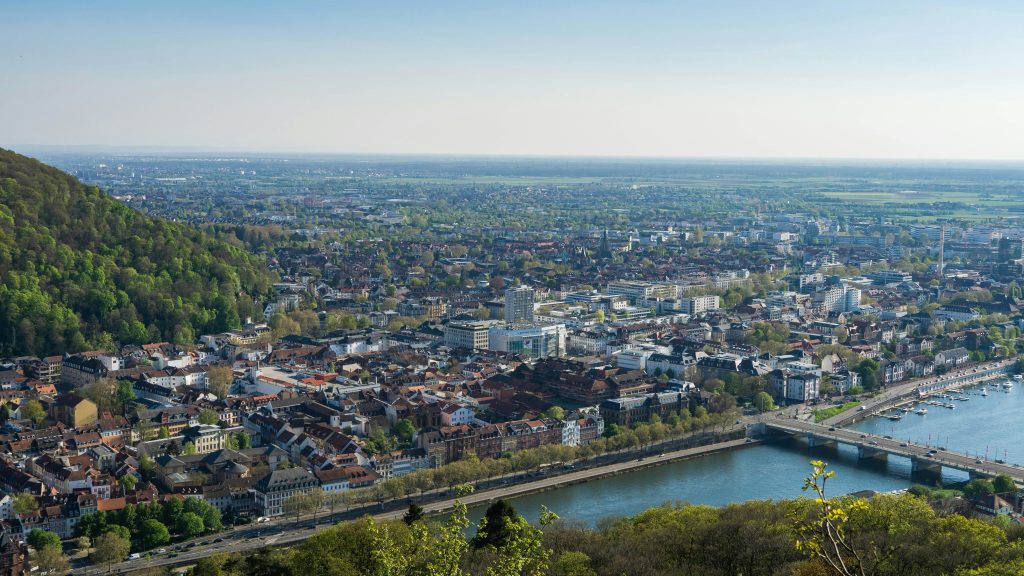
Heidelberg brings castle views and university oddities, but the best moments sit just off the postcard route. Bremen gives you medieval lanes, brick Expressionism, and parks that start close to the station. Leipzig mixes art spaces, canals, monumental history, and subculture in a way that feels easy to enjoy without a strict schedule.
Heidelberg: hidden gems in Germany with hill views and old student secrets
Hidden spots
Start above the Neckar at the Thingstätte on Heiligenberg hill. This Nazi-era open-air theatre was built in 1934–1935 and its history should be treated plainly, not softened. Today it is a quiet cultural monument in the forest, with stone tiers, wide sky, and river views on the walk back down toward Philosophenweg. Check the city’s Thingstätte information before going, as the site is not lit and is best visited in daylight.
Back in town, Kreuzkirche gives you a calmer church stop than the much-visited Heiliggeistkirche. Its ornate details reward a slow look, especially if the Hauptstraße crowds are starting to feel a bit much. It is the kind of place to slip into for 10 quiet minutes before lunch, then continue toward the university quarter.
The Studentenkarzer is the opposite of polished. This former university student jail is still covered with 19th-century graffiti, names, portraits, and cheeky inscriptions left by students who were locked up for rule-breaking. It is small, strange, and perfectly Heidelberg: academic tradition with a wink.
For evening plans, put Karlstorkino on the list. The indie cinema sits away from the most obvious Old Town loop and screens films that suit Heidelberg’s student brain better than another souvenir window. Look for original-language screenings if German subtitles are not part of the weekend plan.
Events to time your trip around
Heidelberg Castle Illuminations are the city’s big summer spectacle. In 2026, the official dates are July 11 and September 5, with the castle lit red before fireworks over the Neckar. The September date is the better bet if you like cooler evenings and a little more breathing room after the busiest summer weeks. Check the official Heidelberg Castle Illumination page before traveling, especially if weather looks rough.
Winter is just as tempting. Heidelberg Christmas Market runs from November 23 to December 22, 2026, with stalls spread through the Old Town and the castle ruins watching over the whole scene. Karlsplatz is the stop to save for last, because the view does the festive heavy lifting without trying too hard. Current details sit on the official Heidelberg Christmas Market page, and the fuller event calendar is covered in our Festivals in Heidelberg 2026 guide.
Bremen: underrated Germany with alleys, brick drama, and riverside festivals
Hidden spots
Bremen’s Schnoor Quarter is not unknown, but it still feels like a detour from ordinary city life. The area is a 15th- and 16th-century maze of narrow artisan lanes, tiny houses, workshops, and cafés tucked close to the market square. Go early if photos matter, or go later if you prefer warm window light and fewer day visitors.
Böttcherstraße is the city’s theatrical shortcut. Built between 1922 and 1931, it packs brick Expressionist façades, sculpture, gold details, and odd corners into one short street. Walk it slowly from the market square end, then turn around and notice how different the façades look from the other direction.
For green space without leaving the center, Wallanlagen Park traces the old city defenses in a curved band of lawns, water, trees, and the famous windmill. It is useful on arrival day because Bremen Hauptbahnhof sits close by. Drop bags, stretch your legs, and let the park lead you toward the Old Town instead of taking the most obvious shopping street.
Bürgerpark is the bigger local escape. It has lakes, lawns, wooded paths, and enough space to turn a simple walk into half a day. Bring snacks from a bakery, pick a bench near the water, and save the museum plan for bad weather.
Events to time your trip around
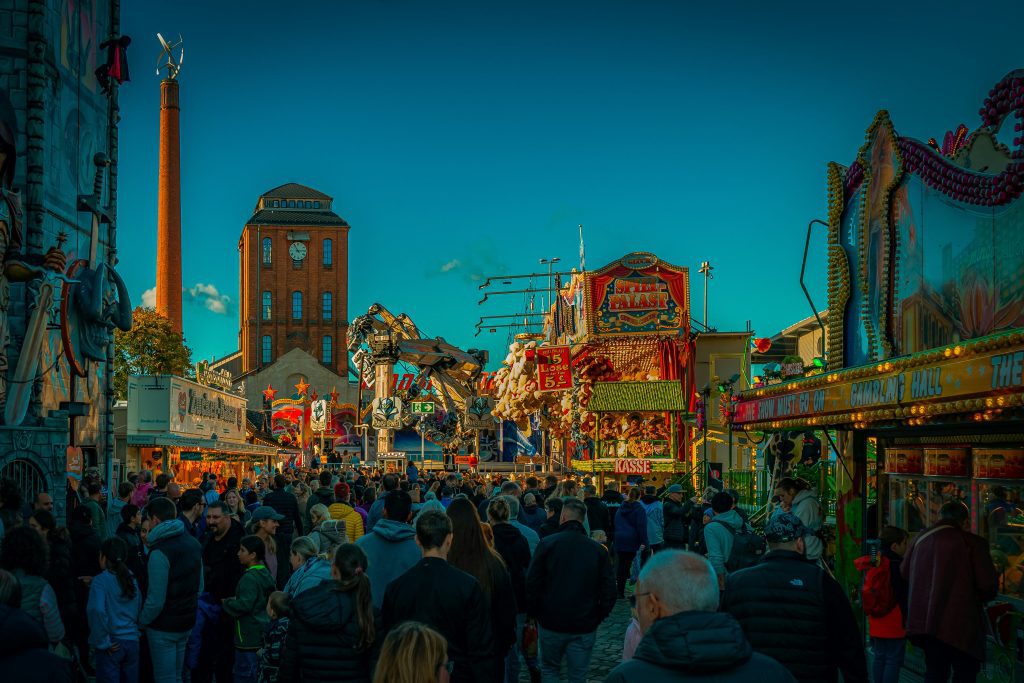
Freimarkt is Bremen at full volume. The 991st edition runs from October 16 to November 1, 2026, on the Bürgerweide by the main station, with smaller fair action around the market square and Liebfrauenkirche. It is billed as Northern Germany’s biggest funfair, and the practical advantage is excellent: you can arrive by train and be close to the rides almost immediately. Dates and visitor details are listed on our Freimarkt Bremen article.
Breminale is the summer counterpoint. In 2026, the free open-air music and culture festival ran from July 1 to 5 on the Osterdeich riverbank, with stages, food stands, and a relaxed Weser-side setting. For future editions, expect the same rough pattern: early summer, outdoors, and very popular once the evening sets in. Check the official Breminale information before planning, then make the Osterdeich your golden-hour walk.
Leipzig: canals, cotton mills, and music after dark
Hidden spots
Leipzig is the loosest of the three cities, and that is the fun of it. Start in Plagwitz, where old industrial buildings, canal bridges, small bars, and studios sit west of the center. The Karl-Heine-Kanal is the easy thread through the neighborhood. Walk it in the late afternoon, when bikes roll past, terraces start filling, and the brick buildings catch the softer light.
The Spinnerei adds the art-world reason to cross town. Founded as a cotton mill in the 19th century, the complex now holds galleries, workshops, project spaces, and creative businesses. It is best on a gallery weekend or Saturday, but even a quiet day gives you that huge-yard feeling that explains why Leipzig keeps pulling artists in.
The Monument to the Battle of the Nations is not small, but it is often missed by travelers who stay inside the ring of the old center. The monument marks the 1813 Battle of Leipzig and feels more like a stone mountain than a standard memorial. Go for history, scale, and the view from the upper levels if stairs are your friend that day.
For a softer landing, head to Südfriedhof next door. This vast cemetery has tree-lined paths, Art Nouveau details, and a calm that pairs well with the monument’s heavy symbolism. It is a good reminder that Leipzig’s appeal is not only nightlife and music. Some of its best hours are quiet ones.
Events to time your trip around
Wave-Gotik-Treffen is Leipzig’s most unmistakable weekend. The next edition runs from May 14 to 17, 2027, and fills venues across the city with goth, darkwave, industrial, medieval, and related scenes. Even if you do not have a festival wristband, the city becomes a people-watching masterclass in black lace, boots, opera coats, and tram-stop patience. Check the official Wave-Gotik-Treffen site before booking anything, because accommodation gets snapped up early.
Late November brings a different version of the city. Leipzig Christmas Market runs from November 24 to December 23, 2026, with more than 300 stalls and a tradition dating back to 1458. It is larger than Heidelberg’s, so use it differently: visit the main market square once, then wander side streets for food, music, and quieter pockets. Current dates are listed by Leipzig tourism on the Christmas in Leipzig 2026 information sheet.

How to visit these 12 hidden spots without overplanning
The smartest route is not to chase all three cities in one trip. Heidelberg pairs well with Frankfurt or Stuttgart arrivals, Bremen with Hamburg or direct regional plans in the north, and Leipzig with Berlin or Dresden. For a value-friendly weekend, stay central, use public transport, and build each day around one neighborhood rather than four scattered pins.
| Spot | Best for | Time needed | Nearest city | How to get there | Best season |
|---|---|---|---|---|---|
| Thingstätte | History, hill views, forest walks | 2–3 hours | Heidelberg | Walk or take local transport toward Heiligenberg, then continue on foot | Spring to autumn daylight |
| Kreuzkirche | Quiet architecture break | 20–30 minutes | Heidelberg | Walk from the Old Town streets | Year-round |
| Studentenkarzer | University history and graffiti | 45–60 minutes | Heidelberg | Walk through the university quarter | Rainy days and winter |
| Karlstorkino | Indie film evenings | One screening | Heidelberg | Use local tram or bus connections | Autumn and winter |
| Schnoor Quarter | Medieval lanes and crafts | 1–2 hours | Bremen | Walk from the market square or Domsheide | Early morning in any season |
| Böttcherstraße | Brick Expressionist architecture | 30–45 minutes | Bremen | Enter from the market square | Late afternoon light |
| Wallanlagen Park | Arrival-day walk | 45–90 minutes | Bremen | Walk from Bremen Hauptbahnhof | Spring and autumn |
| Bürgerpark | Lakes, lawns, longer walks | 2–4 hours | Bremen | Walk or take local transport from the station area | Summer picnics |
| Karl-Heine-Kanal | Canal walks and Plagwitz bars | 2 hours | Leipzig | Take local transport toward Plagwitz | Warm evenings |
| Spinnerei | Contemporary art and industrial spaces | 2–3 hours | Leipzig | Use local transport to Plagwitz, then walk | Gallery weekends |
| Monument to the Battle of the Nations | Scale, history, viewpoints | 1.5–2 hours | Leipzig | Take tram or S-Bahn toward the southeast | Clear days |
| Südfriedhof | Calm paths and Art Nouveau details | 1 hour | Leipzig | Walk from the monument area | Autumn color |
For more Germany planning, the same rule applies in the big cities too: pick one neighborhood, then let the day grow from there. Our Berlin hidden gems guide is useful if your route starts in the capital before continuing to Leipzig.
Pack light shoes, check event dates before booking transport, and choose the city that matches your mood first: Heidelberg for views, Bremen for old lanes and fairground lights, Leipzig for art and after-dark music. Pick one event date now, then build the weekend around the nearest 3 spots.
Hidden gems in Germany: 3 underrated cities FAQs
Which underrated cities in Germany are best for a long weekend?
Heidelberg, Bremen, and Leipzig work well for a long weekend because each city has a compact center and strong rail links. That makes it easy to keep the trip focused on one place instead of rushing across Germany in 48 hours. Each city also has a standout event to time your visit around in 2026 or 2027.
What are the best hidden gems in Germany for first-time visitors?
Heidelberg, Bremen, and Leipzig are strong picks because they mix local character with easy sightseeing. Heidelberg has castle views and university oddities, Bremen has medieval lanes and brick Expressionism, and Leipzig blends art spaces, canals, and subculture. All three feel easier to enjoy when you stay near the center and keep the plan simple.
When should you visit Heidelberg for special events?
The main summer dates in Heidelberg are July 11 and September 5, 2026 for Heidelberg Castle Illuminations. The Christmas Market runs from November 23 to December 22, 2026, which gives you a winter option with Old Town views. Check the official event pages before traveling, especially if weather looks uncertain.
What should you see in Bremen beyond the old town?
Bremen’s Schnoor Quarter and Böttcherstraße are the two standout spots for a slower walk. Wallanlagen Park is useful on arrival day because Bremen Hauptbahnhof sits close by, and Bürgerpark gives you a bigger green break near the center. For events, Freimarkt runs from October 16 to November 1, 2026.
How do you spend a weekend in Leipzig without rushing?
Leipzig works best when you mix one cultural stop with one neighborhood walk. The city is known here for art spaces, canals, monumental history, and late-night wandering, so a slower schedule fits well. Keep the plan centered on the city rather than trying to add too many day trips.
Are these underrated cities in Germany easy to reach by train?
Yes, all three are described as having strong rail links, which is a big part of their appeal. A common plan is to fly into a major German hub, then continue by train to one base city. That keeps the weekend simple and leaves more time for walks, cafés, and museums.
What is the best time of year to visit Bremen?
Bremen is strongest in summer for riverbanks and in autumn for Freimarkt. Breminale took place from July 1 to 5, 2026 on the Osterdeich riverbank, and Freimarkt ran from October 16 to November 1, 2026 by the main station. Both give you a very different city feel, depending on the season.
Why choose one city instead of trying to see several at once?
Choosing one city per weekend gives you more time for local spots and less time on platforms. These cities are compact enough for relaxed walks, and the article points to small museums, riverside paths, and neighborhood corners that are easy to miss on a fast trip. If you want atmosphere without queues, one city is the smarter call.