
10 Fun Facts About Budapest You Probably Didn’t Know
Budapest should be on your travel list! This city is full of art, history, thermal pools, incredible markets, bars and restaurants which are waiting to be explored. We are bringing you the most interesting fun facts about Budapest which will make you want visit this city even more.
Scroll down to learn more about Budapest!
⬇️⬇️⬇️
Budapest packs more oddities per square kilometer than most European capitals. It’s a city where history, engineering, and a fair bit of weirdness meet: hippos in thermal spring water, a metro line that’s also a heritage site, and a naming law that somehow still allows “Legolasz.” Here’s what makes it tick.
#1 Budapest was born from 3 cities
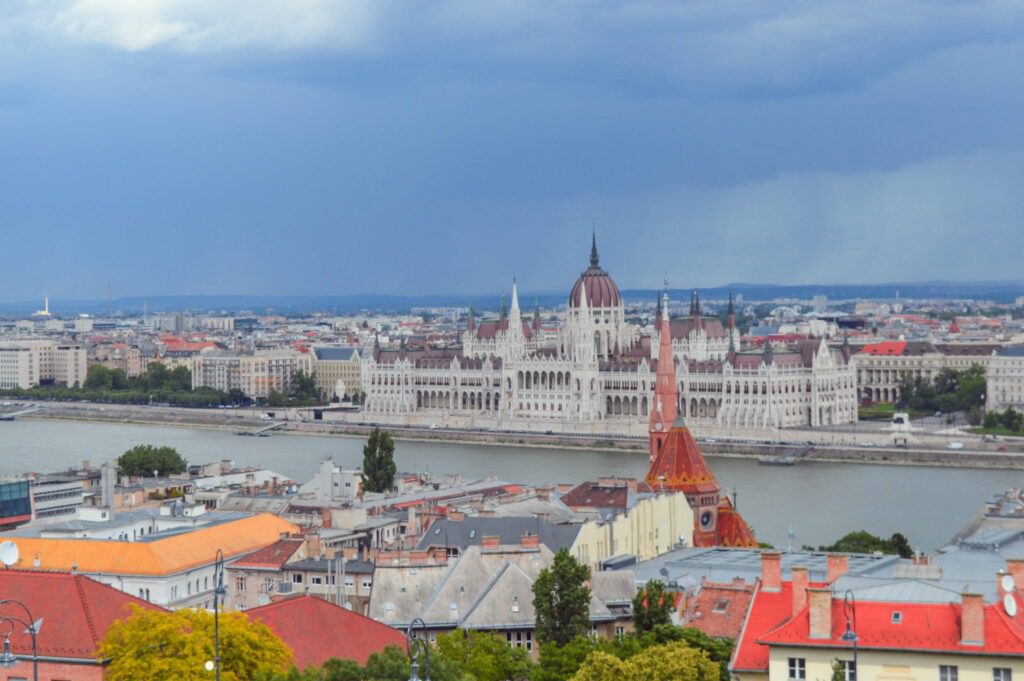
Budapest wasn’t always Budapest. In 1873, three separate towns, Buda, Óbuda, and Pest, merged into one capital. Buda still feels like the quieter, hillier side of town, while Pest is where most of the action (and most of the population) is. The Chain Bridge, officially the Széchenyi Chain Bridge, was the first permanent structure to physically connect the two banks, completed back in 1849.
#2 Budapest is the thermal bath capital of the world
Underneath the city sits a reserve of spring water that pushes up around 70 million liters a day through more than 100 natural springs. That’s what earned Budapest its nickname, the City of Spas, a title it’s held since the 1930s. You can spend a whole day hopping between therapeutic pools, sauna cycles, and even nighttime pool parties.
#3 Hippos at the Budapest zoo are bathing in real thermal water
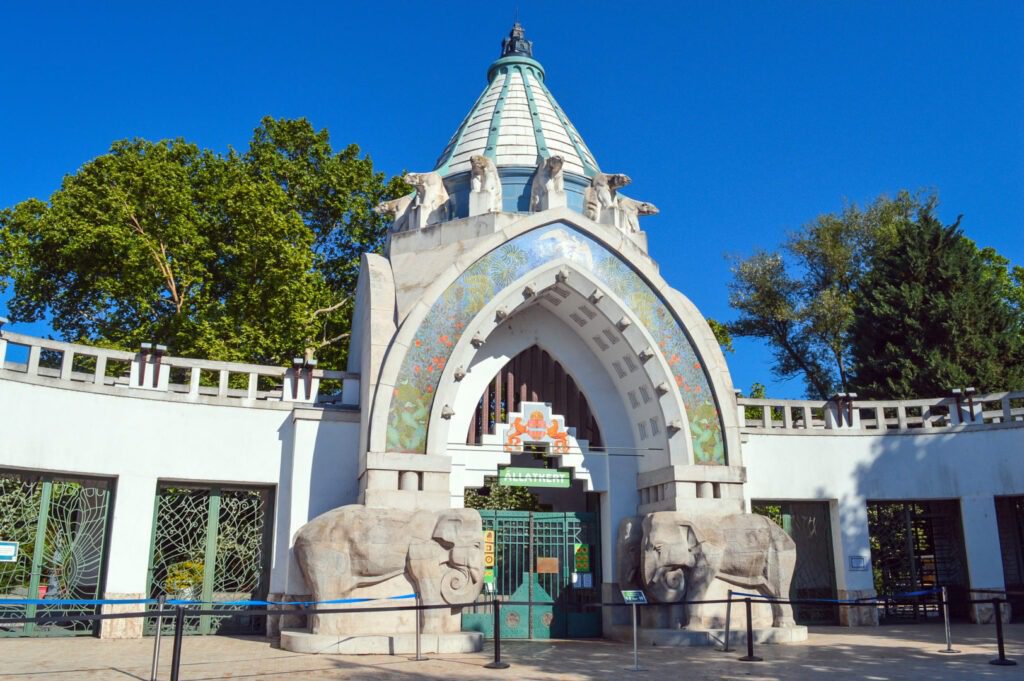
The hippo pool at Budapest Zoo is fed directly from the spring that supplies Széchenyi Thermal Bath. The mineral composition happens to be close to that of the Nile, which makes it a pretty good match for the zoo’s hippos. It’s a small detail, but it says a lot about how deeply thermal water runs through this city, literally.
#4 Hungarian is one of Europe’s toughest languages to learn
Hungarian belongs to the Finno-Ugric language family, related distantly to Finnish and Estonian but sharing very little with the languages around it geographically. Linguists regularly rank it among the hardest languages for English speakers to pick up. If you want to try three words before your trip:
- Hi -> Szia
- Thanks -> Köszönöm
- Cheers -> Egészségedre
#5 Europe’s largest synagogue sits on Dohány Street in Budapest
The Dohány Street Synagogue, also called the Great Synagogue, seats close to 3,000 people, making it the largest synagogue in Europe and the second largest in the world. Built between 1854 and 1859, it blends Moorish, Byzantine, and Gothic design elements. The complex also includes the Hungarian Jewish Museum and the Holocaust Memorial Park.
#6 Hungary has an official list of legal baby names
Yes, this is still true, and it recently got a plot twist. Hungarian parents have to pick a name from an approved government list, or apply for an exception. Until 2025, linguists at Hungary’s national language research institute reviewed those exception requests. As of 2025, that authority moved to the government minister responsible for culture. Despite efforts to trim the list of “unusual” entries, names like Legolas remain officially approved, so don’t expect the rules to get much stricter anytime soon.
#7 Budapest has the oldest metro system in continental Europe
The Budapest Millennium Underground, known locally as the M1 or Kisföldalatti (“little underground”), opened on May 2, 1896. It’s the second oldest metro line in the world after London’s, and the first electrified underground railway built on the European mainland. In 2002, UNESCO added the M1 to Budapest’s existing World Heritage Site, which also covers the Danube banks, the Buda Castle Quarter, and Andrássy Avenue, making it one of the very few metro lines on earth to carry that recognition.
#8 The Parliament and the Basilica share a height on purpose
The Hungarian Parliament Building and St. Stephen’s Basilica are both exactly 96 meters tall. That number isn’t random: it references 896 AD, the year the Magyars settled the Carpathian Basin, and the shared height was meant to symbolize a balance between state and church. For over a century, city rules kept new buildings from exceeding that mark. One exception has since appeared on the skyline: the 143-meter MOL Campus office tower, completed in 2022, quietly became Budapest’s tallest building.
#9 Budapest is the birthplace of the Rubik’s Cube
The world’s best-selling puzzle toy was invented in Budapest in 1974 by Ernő Rubik, an architecture professor. Rubik originally built it as a teaching tool to help his students understand 3D structures and never expected it to become a global phenomenon. It has since sold hundreds of millions of units worldwide.
#10 Budapest has more celebrities than one might think
Some famous Budapest-born names you’ll recognize are the Hollywood director Sir Alexander Korda, Nobel laureate Albert Szent-Györgyi (who discovered Vitamin C), and Pulitzer Prize founder Joseph Pulitzer, whose name now sits on one of journalism’s biggest honors.
Budapest is actually a merger of two cities, Buda and Pest. Separated by the Danube River, they were joined together in 1873. Buda is known for its hills and historical sites, while Pest is renowned for its vibrant city life. Budapest is referred to as the "City of Baths" due to its abundance of thermal waters. It has more than 100 thermal springs, which supply the city's many bathhouses and spas, making it a popular destination for wellness and relaxation. Yes, Budapest was the first city in mainland Europe to have an underground railway system. The M1 line, known as the "Millennium Underground," was built in 1896. Yes, the famous Rubik's Cube was invented by Ernő Rubik, a Budapest-born architecture professor, in 1974. Indeed, Budapest is home to the Dohány Street Synagogue, the largest synagogue in Europe and the second largest in the world, with a capacity to accommodate up to 3,000 people. Hungary, and by extension Budapest, is one of the oldest wine-producing regions in the world. You can taste famous Hungarian wines such as Tokaji in the city's historic wine bars and shops. Budapest has a reputation for being one of Europe's most haunted cities, with many folklore tales of vampires, ghosts, and spirits adding to its mystique. The Chain Bridge, a symbol of Budapest, was the first permanent stone-bridge connecting Pest and Buda. At the time of its completion in 1849, it was regarded as a wonder of engineering. Hungarian, the official language of Hungary, is unlike any other European language. Its closest relatives are Finnish and Estonian, but it still holds significant differences from both. Budapest is the birthplace of numerous famous figures, including Hollywood film director Sir Alexander Korda, Nobel laureate Albert Szent-Györgyi (the discoverer of Vitamin C), and Pulitzer prize-winning journalist Joseph Pulitzer.Fun facts about Budapest: FAQs
Is Budapest one city or two?
Why is Budapest known as the "City of Baths"?
Does Budapest have historical significance in railway development?
Was the Rubik's Cube invented in Budapest?
Does Budapest have a significant Jewish landmark?
Is Budapest known for any specific type of wine?
Is Budapest considered a haunted city?
What is the significance of the Chain Bridge in Budapest?
What makes the Hungarian language unique?
Who are some famous personalities born in Budapest?