

A school trip to Barcelona works best across four days: long enough for Gaudí, the Gothic Quarter, Montjuïc and a subject-led activity, but short enough to keep travel and staffing manageable. November–March usually brings better availability than peak season, while one connected urban area can support Spanish, art, history, geography and PE without hours lost on coaches. Many headline sights can also be studied free from the street, so a strong Barcelona school trip does not need a paid attraction in every session.
Ready to plan your school trip to Barcelona?
Let’s go! 🎒✨
Why Barcelona works for a school group
Barcelona packs an unusually broad curriculum into a compact city. Roman remains sit beneath medieval streets, Catalan Modernisme fills the Eixample, and the Olympic sites of 1992 spread across Montjuïc. Students can compare centuries of urban change before lunch, then order that lunch in Spanish.
The historic center is particularly useful on foot. Plaça Sant Jaume occupies the political heart of the city, close to the Roman street plan and the surviving columns of the Temple of Augustus. From there, a route through the Gothic Quarter can include Barcelona Cathedral, Plaça del Rei, the former Jewish quarter and the marks left by the Spanish Civil War at Plaça de Sant Felip Neri. The narrow lanes require tighter supervision, but distances between stops remain short.
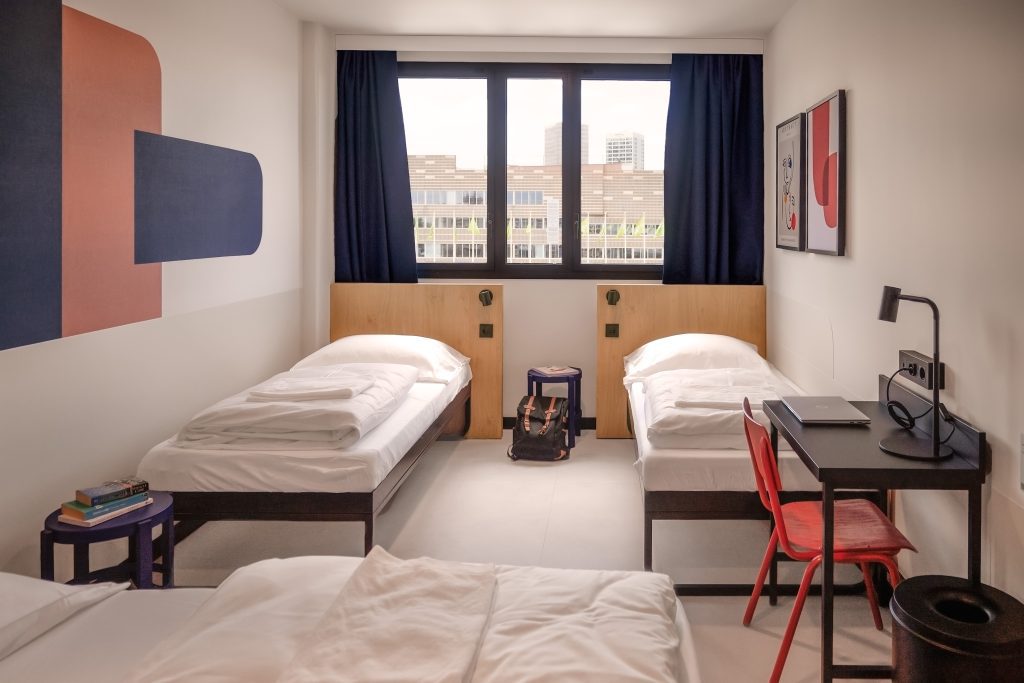
The wider city is tied together by metro, suburban rail, tram and bus services. L’Hospitalet de Llobregat, where MEININGER Hotels in Barcelona are based, is included in Barcelona’s metropolitan fare area. This matters when you are moving 45 teenagers and do not want separate transport zones complicating the head count.
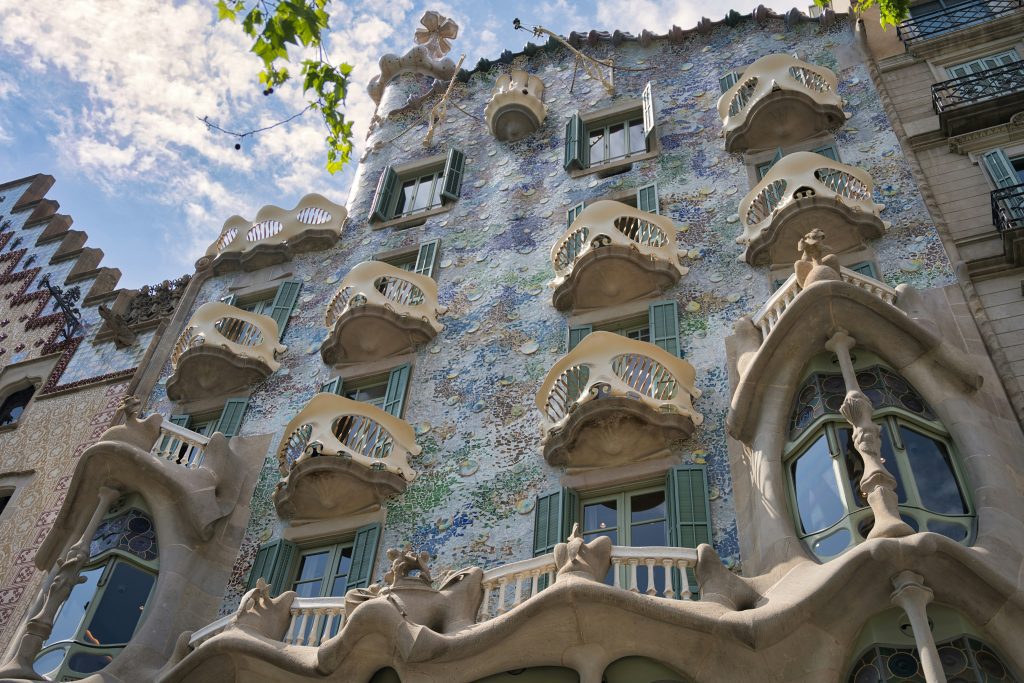
Plenty can be taught without entering a ticketed building. The façades of the Sagrada Família, Casa Batlló and La Pedrera support architecture sketching and comparison tasks. Passeig de Gràcia works for urban geography, branding and land-use surveys. Barceloneta adds coastal management, while the Olympic Ring supports discussions about regeneration and sporting legacy.
For a four-day visit from the UK, flying is usually the practical choice. Rail travel through France suits schools prioritizing lower-carbon travel, but it needs more timetable space and careful contingency planning. Whichever route is chosen, schedule one proper meal and one unstructured rest period each day. Barcelona rewards curiosity, but tired students stop noticing the details surprisingly fast.
When to go, and when not to
November–March is the strongest window for most educational trips to Barcelona. Accommodation and attraction availability are often easier outside school holidays, the midday heat is less demanding, and popular streets are simpler to manage as a group. Bring waterproof layers rather than assuming Mediterranean means dry every day.
There is one major winter caveat. Large congresses at Fira Barcelona can tighten room availability across the city, particularly around Gran Via. Check the official event calendar before settling on dates, even if your preferred week appears comfortably outside the main vacation periods.
July and August are poor choices for a conventional school program. Heat, crowds and long outdoor days make close supervision harder, while shade is limited around some Gaudí sites. Easter also brings increased demand and altered opening arrangements. La Mercè, Barcelona’s main city festival around September 24, fills streets and squares with public events. It can be culturally rewarding, but it is not the week for a first-time trip leader testing a strict timetable.
April 23 is the exception worth serious attention. Sant Jordi fills Barcelona with books and roses, turning language work into something visible and immediate. Students can photograph Catalan book displays, compare cover design, collect useful phrases from signs and observe how a local tradition changes public space. For modern foreign languages departments, it is a gift.
Late spring can work if outdoor study is scheduled early and museum sessions fill the warmer part of the afternoon. For the cleanest balance of budget, comfort and crowd control, choose late November, January or early February, then check for trade fairs before confirming transport.
A 4-day school trip to Barcelona itinerary
This Barcelona school trip itinerary groups nearby sights rather than chasing famous names across the map. It gives each day a clear academic purpose and leaves enough slack for security checks, restroom stops and the student who discovers a missing metro card exactly when the train arrives.
Day 1: orientation and the Gothic Quarter
Start at Plaça de Catalunya with a map-reading task. Students should identify the Eixample grid, the old city and the direction of the sea before moving south. Continue through the Gothic Quarter to Plaça Nova, the Roman wall, Plaça Sant Jaume and the Temple of Augustus columns.
Use Plaça del Rei to connect Roman Barcino with medieval Barcelona, then finish in El Born near Santa Maria del Mar. A short language challenge can be added at Mercat de Santa Caterina or local bakeries: identify Catalan and Spanish words, ask for an item politely and record the response. Keep the first evening quiet. Travel delays and early departures make a packed arrival night a false economy.
Day 2: Gaudí and the Eixample
Begin at the Sagrada Família. Its official student visit lasts about 50 minutes and must be booked at least 15 days ahead. Teachers cannot deliver their own explanations inside during that guided format, so move detailed briefing to the pavement before security.
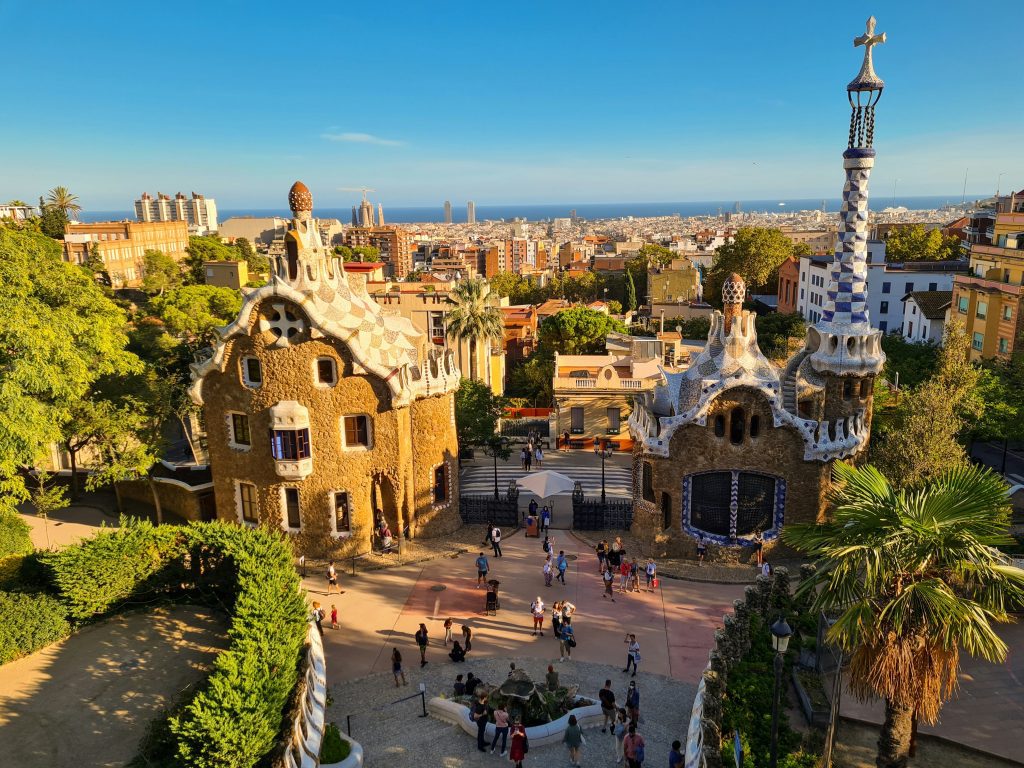
Continue to Passeig de Gràcia for Casa Milà and Casa Batlló. Studying both from outside costs nothing and supports comparison work on structure, ornament, natural forms and the ambitions of Barcelona’s industrial middle class. Finish at Park Güell, where the school booking process asks about educational aims. Split sketching tasks between engineering, mosaics and how the site follows the slope.
Day 3: Picasso and Montjuïc
Reserve the morning for the Museu Picasso. Standard groups are limited to 20 people, so a party of 45 needs staggered entry and separate staff leads. Bags larger than 30 × 30 centimeters cannot enter the galleries, which is an excellent reason to leave daypacks at the hotel.
After lunch, move to Montjuïc. Compare the architecture of the 1929 International Exhibition with the Olympic Ring developed for the 1992 Games. PE students can assess venue legacy and public access. Geography students can consider how events reshape transport, housing and city identity. The open spaces around the stadium also give the group room to reset after the close quarters of a museum.
Day 4: swap in your subject priority
Choose one anchor rather than squeezing in three. Sports groups can use the Barça Museum school visit, checking the current stadium access included before booking. Science groups should choose CosmoCaixa for interactive physics, environmental science and the Flooded Forest. Spanish, art or design groups can use Poble Espanyol for architecture, crafts and team activities aimed at international schools.
For a three-day trip, remove the Day 4 option and keep the first three routes intact. For two days, combine the Gothic Quarter with Picasso, then make Gaudí the second day. Do not add Montjuïc unless your subject focus requires it. A shorter program works only when transfer time is cut, not when four days of content are forced into two.
Curriculum links by subject
Educational trips to Barcelona work best when every booking has a question attached. “Visit Park Güell” is an activity. “Assess how Gaudí adapted design to terrain, climate and movement” is a learning objective. Share that distinction with venues when asking about school programs, workshops or teaching materials.
| Subject | Where to go | What it covers | Pre-book? |
|---|---|---|---|
| Spanish and Catalan | Gothic Quarter, markets, Sant Jordi events | Transactional language, public signs, regional identity and bilingual communication | No for street tasks; yes for guided activities |
| Art and design | Sagrada Família, Park Güell, Museu Picasso | Modernisme, symbolism, portraiture, materials, color and changing artistic style | Yes |
| History | Plaça del Rei, Gothic Quarter, Montjuïc Castle | Roman Barcino, medieval government, conflict, dictatorship and public memory | Yes for interiors and group activities |
| Geography | Eixample, Barceloneta, Montjuïc | Urban planning, coastal regeneration, land use, event-led development and visitor pressure | No for fieldwork |
| Science | CosmoCaixa | Physics, geology, biodiversity, astronomy and evidence-based investigation | Yes for groups and workshops |
| PE and sports studies | Olympic Ring, Barça Museum | Major-event legacy, elite sport, club identity, facilities and commercial sport | Yes for the museum |
| Business and economics | Passeig de Gràcia, La Rambla, Fira district | Retail location, branding, hospitality, congress travel and competing uses of city space | No for fieldwork |
Older students can complete paired fieldwork. One student records physical evidence, while the other links it to a classroom concept. At Passeig de Gràcia, that might mean noting global brands, pavement width, traffic flow and historic façades. At Barceloneta, it could involve beach management, apartment use and signs aimed at travelers.
Younger groups need shorter outputs. Give each team five images to find, three Spanish phrases to use and one question to answer. Poble Espanyol is especially practical for mixed abilities because architecture, craft demonstrations and cooperative tasks can be experienced without long written interpretation.
Set the final product before departure. A bilingual audio guide, regeneration report, Gaudí design board or Olympic legacy debate gives students a reason to collect specific evidence. It also makes the Barcelona school trip easier to defend academically when senior leaders ask what was learned beyond the photographs.
What to book ahead, and what costs nothing
Reserve the Sagrada Família, Park Güell, Museu Picasso and any stadium or workshop session first. School rates often appear on separate education pages rather than the main ticket screen, so contact the venue directly with the school name, age range, total number of students, staff count, preferred language and learning objective. Ask about complimentary teacher places, accessibility, bag rules and the maximum number admitted per time slot.
Large groups rarely enter as one unit. Museu Picasso caps standard groups at 20, while workshop capacities elsewhere may be lower. Build separate subgroup names before leaving school and assign each student to a staff member. Doing this outside the venue, with a queue forming behind you, is an avoidable test of everyone’s patience.
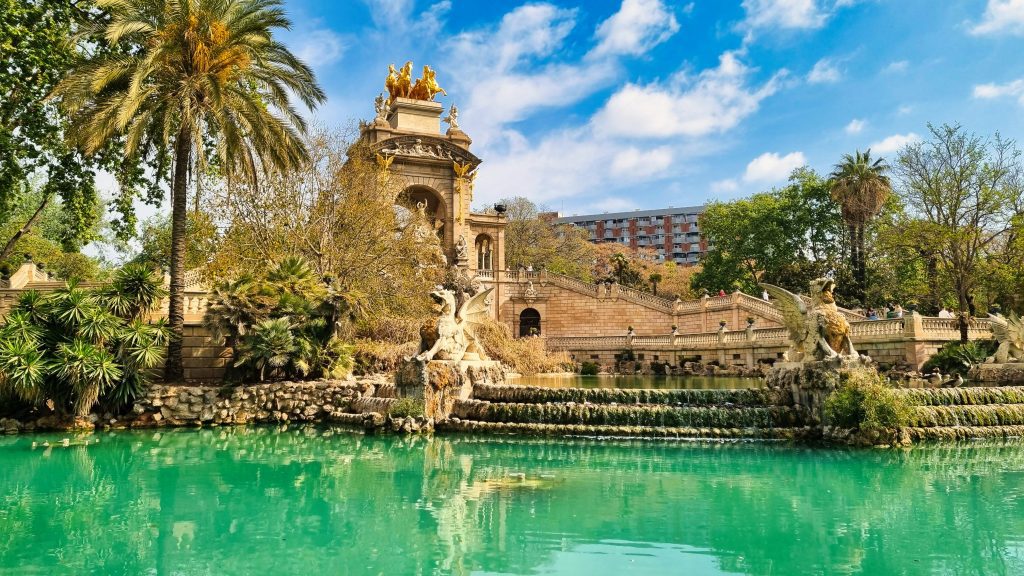
Free study options include the exterior of the Sagrada Família, Passeig de Gràcia’s Modernista façades, the Gothic Quarter, Santa Maria del Mar’s surrounding streets, Barceloneta beach, Port Vell, Parc de la Ciutadella and the public areas of the Olympic Ring. Arc de Triomf also works for a short architecture stop on the way to the park.
For transport, compare unlimited individual passes with integrated group products on the official TMB fare pages. The T-escolar covers two trips for eligible school groups up to age 16 and accompanying leaders, but it requires accreditation from Barcelona’s municipal education institute and an appointment at a TMB service point. Overseas schools should confirm eligibility rather than budgeting on the assumption that it applies.
- Book timed attractions and workshops first.
- Confirm flights or rail once those anchor sessions are held.
- Request group accommodation with rooming and meal needs in writing.
- Choose the transport product after counting planned journeys.
- Keep one free outdoor session available as a timetable buffer.
Budget by category rather than guessing a single daily figure. Separate transport, admissions, meals, insurance, staffing, contingency and optional spending. Give students a clear personal spending rule before departure. A fixed daily limit and no unsupervised cash-machine visits prevent several predictable problems.
Keeping 45 teenagers safe and on schedule
A group of 45 should operate as three smaller teams, not one long crowd. Give each team a color, a named staff lead and a fixed meeting position. Staff should stand at the front, middle and rear when walking, then switch to door positions on public transport.
At metro barriers, one adult enters first and another goes last. Count on the platform, count inside the carriage and count again after leaving the station. If the door warning sounds, nobody boards. The official metro guidance says to wait for the next train rather than attempt to enter or exit as doors close.
Use a written lost-student rule. The student stays where they last saw the group, contacts the trip phone and approaches uniformed staff if available. The group does not scatter to search. On the metro, SOS intercoms connect passengers with the control center. Spain’s general emergency number is 112.
Street theft deserves a direct briefing. The UK government warns that distraction theft often involves teams. Students should carry phones in zipped inner pockets, keep bags closed on public transport and avoid storing a passport, wallet and phone together. Staff should hold copies of passport photo pages and emergency contacts separately from the originals.
The teacher checklist worth screenshotting
- Create three fixed subgroups before departure and never reorganize them in the street.
- Give every student the hotel name, trip phone number and written lost-person procedure.
- Use the same head-count order every time, preferably by numbered register.
- Place one adult at each metro door used by the group.
- Carry medication details, consent information and emergency contacts offline.
- Check bag-size restrictions before each museum day.
- Set two meeting points: one immediate point and one backup away from the crowd.
- Leave 20–30 minutes between a planned arrival and every timed group booking.
- Keep passports secured at the hotel unless they are required that day.
- Check demonstrations, severe weather and transport disruption each morning.
The night before departure, print one copy of this checklist for every staff lead, mark the three subgroup registers in different colors and place the trip phone number on each student’s room card.
School trip to Barcelona FAQs
How many days are best for a school trip to Barcelona?
Four days gives a school group time to study Gaudí, the Gothic Quarter, Montjuïc and one subject-led activity. It also leaves room for meal breaks, rest periods, security checks and transport delays.
What is the best time of year for a Barcelona school trip?
November through March usually offers easier accommodation and attraction availability, with less demanding midday heat. Late November, January and early February offer a useful balance of budget, comfort and crowd control, but Fira Barcelona events should be checked before dates are confirmed.
What can students learn during educational trips to Barcelona?
Barcelona supports Spanish, art, history, geography and PE in one compact city. Students can study Roman remains, Catalan Modernisme, coastal management at Barceloneta and the sporting legacy of the 1992 Olympic sites.
What should a four-day Barcelona school trip itinerary include?
Day 1 can cover Plaça de Catalunya, the Gothic Quarter, Plaça Sant Jaume, the Temple of Augustus and El Born. Later days can focus on Sagrada Família and the Eixample, Montjuïc and a wet-weather activity such as Museu Picasso, CosmoCaixa or Poble Espanyol.
How far ahead should a school group book the Sagrada Família?
The official student visit lasts about 50 minutes and must be booked at least 15 days ahead. Teachers should give detailed explanations outside before security because they cannot provide their own commentary inside that guided format.
Can a school trip to Barcelona include free activities?
Yes, many headline sights can be studied from the street without entering a ticketed building. Students can compare the façades of Sagrada Família, Casa Batlló and La Pedrera, then use Passeig de Gràcia for architecture and land-use work.
What are the best rainy-day activities for a Barcelona school trip?
Museu Picasso, CosmoCaixa and Poble Espanyol can replace exposed walking sessions. Group entry must be arranged in advance, so one indoor option should be planned for every day.
How should a school group get around Barcelona?
The metro, suburban rail, tram and bus network connects the main study areas, while L’Hospitalet de Llobregat is included in Barcelona’s metropolitan fare area. For groups traveling from the UK, flying is usually practical, while rail through France requires more timetable space and contingency planning.