

Things to do in Milan on a budget are easier to find than the city’s fashion-week reputation suggests: free museum courtyards, landmark churches, canal walks, and aperitivo spreads can fill a full day without draining your card. Start with the free layer, add an ATM 24-hour or 3-day transport ticket when you need the metro, and save your paid splurges for the sights that really matter to you.
Ready to explore things to do in Milan on a budget?
Let’s go! 🎒✨
Is Milan expensive?
Milan can be expensive, especially during Fashion Week, Design Week, and big trade-fair periods, when hotel rooms and restaurant tables get snapped up fast. The city also has a business-travel rhythm, so weekday flights and central stays can feel pricier than in smaller Italian cities. Look past that first impression, though, and Milan on a budget starts to make sense.
The trick is knowing which parts of the city are free by design. Castle courtyards, major churches, public parks, cemetery sculpture, street art, and some permanent collections cost nothing. Several civic and state museums also open for free on set days, although booking rules and eligible dates change, so official museum pages deserve a quick check before you build the day around them.
Budget things to do in Milan also cluster well. The Duomo, Galleria Vittorio Emanuele II, La Scala, Brera, Castello Sforzesco, and Parco Sempione can be linked on foot, with gelato-window browsing and courtyard stops along the way. Navigli works better as an evening plan, while Isola and Garibaldi pair nicely with Cimitero Monumentale and modern architecture around Porta Nuova.
Free things to do in Milan on a budget
The Duomo façade and Galleria Vittorio Emanuele II
The Duomo di Milano is ticketed inside, but the best first look is free: stand in Piazza del Duomo and take in the spires, statues, and pink Candoglia marble from the outside. Go early for cleaner photos, or come back after dark when the façade glows and the square finally slows down. Right beside it, Galleria Vittorio Emanuele II gives you glass-roof drama, mosaic floors, and luxury-window theater without asking you to buy anything.
Castello Sforzesco courtyards
The courtyards of Castello Sforzesco are open free daily from 07:00 to 19:30, while the museums usually run Tuesday to Sunday from 10:00 to 17:30, with last admission before closing. Free museum entry is offered by Milan’s civic museums on the first and third Tuesday of the month from 14:00, and on the first Sunday of the month. That means the courtyards are your reliable no-cost stop, while the museum rooms are worth timing carefully.
Parco Sempione and the Navigli canal paths
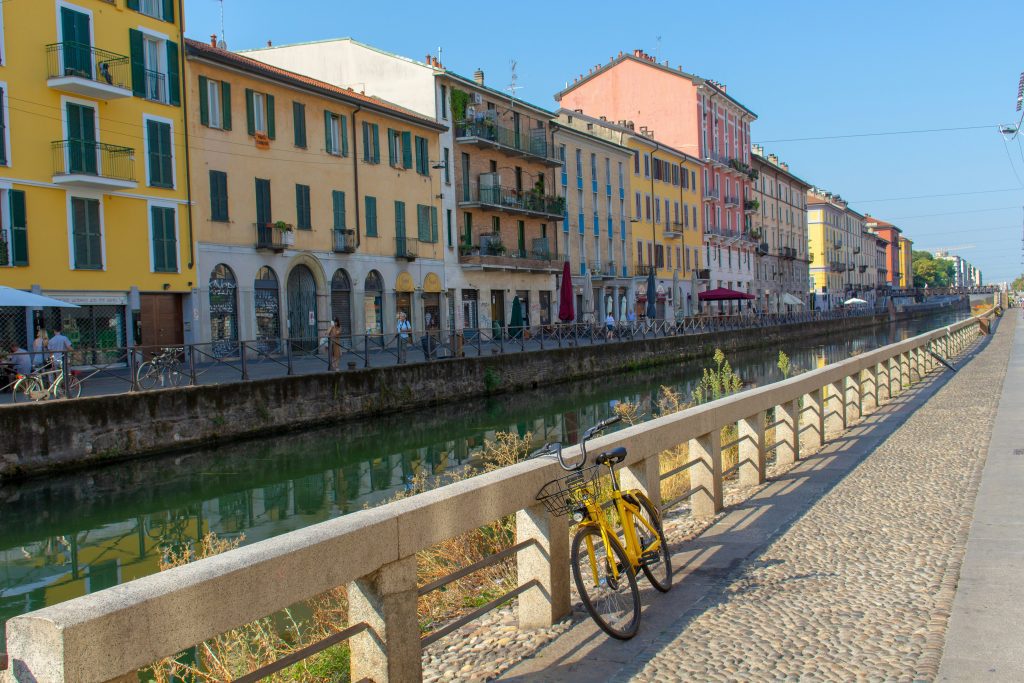
Parco Sempione sits right behind the castle, so it works as the easiest picnic pause in central Milan. Walk toward Arco della Pace for a classic city view, or sit near the pond when the afternoon heat settles in. For bikes, save Navigli for a slower ride along the canals, where flat paths, bridge views, and evening reflections do most of the work.
Free-entry churches
Sant’Ambrogio, Sant’Eustorgio, and San Maurizio al Monastero Maggiore are three of the best cheap things to do in Milan because the main church spaces can be visited for free. Sant’Ambrogio gives you Romanesque brickwork and a hushed courtyard. San Maurizio is the show-off, covered in frescoes, while Sant’Eustorgio puts you close to Colonne di San Lorenzo and the walk toward Navigli.
Cimitero Monumentale
Cimitero Monumentale is a free open-air sculpture museum with mausoleums, carved angels, family chapels, and Milanese history in marble. It is usually open Tuesday to Sunday from 08:00 to 17:30, with shorter hours on some public holidays. Treat it as a quiet cultural visit, not a photo hunt, and leave time for the Famedio entrance hall before wandering the side paths.
Street art in Isola and Corso di Porta Ticinese
Isola is best for a self-guided street-art loop with a side of everyday Milan: balconies, bars, shutters, and walls that change often. Around Corso di Porta Ticinese, murals and stickers sit between vintage shops, San Lorenzo, and the walk down to the canals. Both areas work well when museums are closed on Monday.
| Spot | When it is free | Good for |
|---|---|---|
| Duomo façade and Galleria Vittorio Emanuele II | Always from outside | First-time Milan photos |
| Castello Sforzesco courtyards | Daily courtyard access | History without a ticket |
| Parco Sempione | Always | Picnics and shade |
| Sant’Ambrogio, Sant’Eustorgio, San Maurizio | Main church spaces | Art, architecture, quiet breaks |
| Cimitero Monumentale | Regular opening days | Sculpture and local history |
| Isola and Corso di Porta Ticinese | Always | Street art and neighborhood walks |
Free museum days worth planning around
Domenica al Museo
Italy’s first-Sunday initiative unlocks major Milan culture for the price of a little patience. State museums like Pinacoteca di Brera take part, and Milan’s civic museums list first Sunday as free entry too. The catch: popular sites may need timed reservations, and free days mean longer lines.
For a low-stress plan, pick one headline museum for the morning. Leave the afternoon open. Civic names worth checking: Museo del Novecento, the Castello Sforzesco museums, GAM, the Archaeological Museum, the Natural History Museum, and the Civic Aquarium. Landing on a first Sunday? Build the day around walking routes instead of squeezing in every free door.
Pinacoteca di Brera
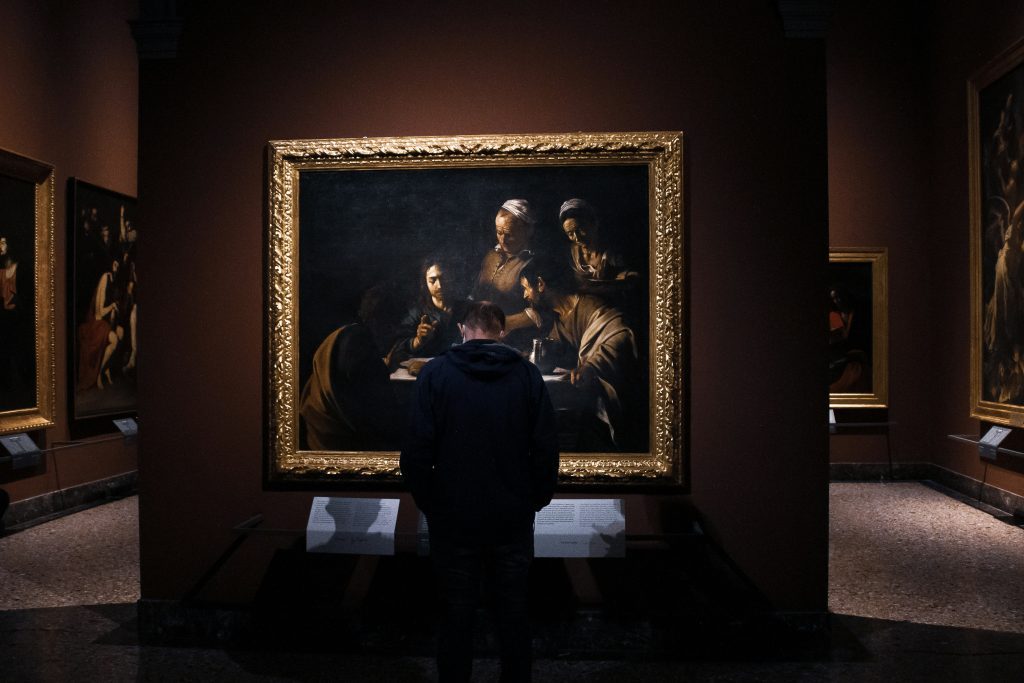
Pinacoteca di Brera is one of the smartest free-Sunday picks, especially if Italian painting is on your Milan list. The museum has stated that first-Sunday admission is free with mandatory reservations, so do not just show up and hope. Pair it with Brera’s side streets, the Orto Botanico area, and a walk back toward La Scala for a culture-heavy morning that still feels relaxed.
Always-free permanent collections
Pirelli HangarBicocca is the big one for contemporary art fans: admission to its exhibitions is free, and online reservation is suggested for priority access. Its vast industrial halls make a good bad-weather plan, especially when central museums are crowded. Check reopening notices before going, because installation changes can temporarily close exhibition spaces.
MUDEC keeps its Permanent Collection free, while temporary exhibitions are ticketed. It pairs well with the Tortona and Navigli areas, so save it for a late afternoon when you want culture before aperitivo. Triennale Milano, beside Parco Sempione, offers free access to the building and garden, with tickets needed for some exhibitions and performances.
Design lovers should also check what is open during Milan Design Week, usually in April, when showrooms, courtyards, and installations appear across Brera, Tortona, Porta Venezia, and Isola. Many events are free, but queues can be long after work hours. For a design-first trip, the MEININGER Milan Design Week guide is a useful extra read before choosing your neighborhood route.
Eating and getting around without overspending
Aperitivo hour from 18:00 to 20:00
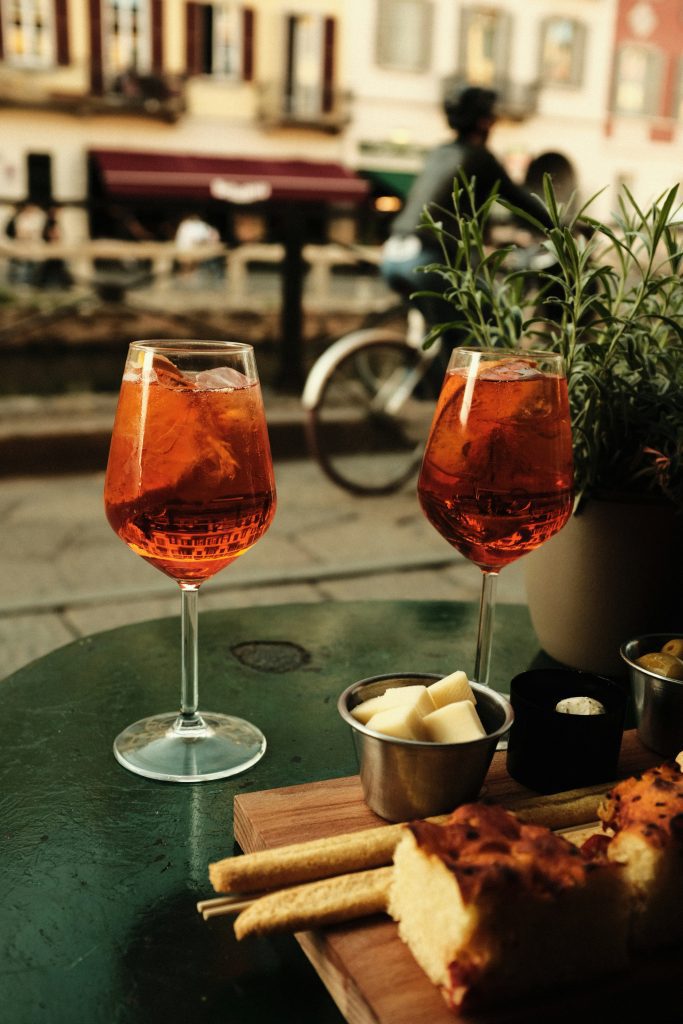
Aperitivo: Milan’s budget superpower. Between 18:00 and 20:00, many Milan bars serve snacks with your drink. Some give you enough focaccia, pasta salad, vegetables, and small plates to skip dinner altogether. Reliable areas: Navigli, Porta Venezia, Isola, and the side streets off Corso Sempione. Read the menu board first — formats range from a few bites to a proper spread.
The best value is rarely the loudest canal-side terrace. Step one street back from Naviglio Grande, try around Via Vigevano, or head towards Porta Genova for a calmer table. If food arrives as small plates instead of a buffet, ask what’s included before you order. And skip any place that doesn’t show its rules clearly.
Pizza al trancio and market stalls
Pizza al trancio, Milan’s thick square slice, is a budget classic because it fills you up fast and travels well. It is ideal between museums when a full restaurant lunch would eat into the afternoon. Look for bakeries and slice shops around stations, university areas, and residential streets rather than directly on the Duomo square.
For market energy, Mercato di Sant’Ambrogio works well with a church-and-courtyard morning on the west side of the center. Around Naviglio Grande, food stalls and simple counter spots make dinner flexible if aperitivo crowds are heavy. A supermarket picnic also works in Parco Sempione, but choose bins and benches carefully because Milan parks are tidy for a reason.
ATM Milano transport passes
ATM Milano runs the metro, trams, and buses, and its central fare zone covers most places in this guide. A single ticket is timed from first validation, while 24-hour and 3-day tickets allow unlimited journeys in their validity period. The official ATM app and metro machines are the simplest purchase points for short stays.
Use transport to connect clusters, not to hop one stop at a time. Walk Duomo to Brera to Castello to Parco Sempione, then ride to Navigli for the evening. From Lambrate, M2 is handy for Cadorna, Garibaldi, Sant’Ambrogio, and Porta Genova, while Garibaldi connects well with Isola, Monumentale, and central changes.
A budget-friendly Milan route that saves time
Start at Piazza del Duomo before the square fills, then cross Galleria Vittorio Emanuele II and continue toward La Scala. From there, cut into Brera for small streets, gallery windows, and coffee counters where standing at the bar usually costs less than sitting at a table. If it is a first Sunday and you have a Brera reservation, this is the neatest moment to use it.
Next, walk to Castello Sforzesco for the courtyards and pass straight through to Parco Sempione. This stretch gives you one of Milan’s best no-ticket sequences: cathedral exterior, 19th-century arcade, opera-house square, art district, castle walls, and city park. Bring a water bottle, because public fountains are useful when the August pavement starts radiating heat.
In the afternoon, choose one direction. For design and contemporary art, take the metro toward Pirelli HangarBicocca and give the huge installations proper time. For canals and food, ride to Porta Genova, stop at MUDEC’s free permanent collection if it fits your timing, then wander toward Naviglio Grande.
Evening belongs to aperitivo, but do not wait until peak hunger to pick a place. Arrive closer to 18:00 if you want a table, especially on Friday and Saturday. Afterward, walk the canal edges rather than booking a taxi back across town, and let the metro do the boring distance.
Things to do in Milan on a budget: FAQs
What are the best free things to do in Milan on a budget?
The best free stops include the Duomo exterior in Piazza del Duomo, Galleria Vittorio Emanuele II, the courtyards of Castello Sforzesco, Parco Sempione, and Cimitero Monumentale. San Maurizio al Monastero Maggiore, Sant'Ambrogio, and Sant'Eustorgio also give you major art and architecture without a ticket for the main church spaces. A good route links several of them on foot in one day.
Is Milan expensive for travelers?
Milan can feel expensive during Fashion Week, Design Week, and big trade-fair periods, especially for central rooms and popular restaurant tables. Weekday flights and stays can also run higher than in smaller Italian cities because the city moves to a business-travel rhythm. Free sights and time-based ATM tickets help balance the budget.
How many days do you need for Milan on a budget?
A full day can cover the main free sights if you link the Duomo, Galleria Vittorio Emanuele II, Castello Sforzesco, Parco Sempione, and a church stop on foot. Two days gives room for the Navigli canals, Cimitero Monumentale, and a slower museum plan. The city works well for short, walkable visits.
Can you visit the Duomo in Milan for free?
The Duomo interior is ticketed, but the exterior can be enjoyed freely from Piazza del Duomo any time. Early morning gives cleaner photos, and the square is quieter after dark when the façade lights up. The nearby Galleria Vittorio Emanuele II is also free to enter.
When are museums free in Milan?
Milan’s civic museums offer free entry on the first and third Tuesday of the month from 14:00 and on the first Sunday of the month. State museums also join Domenica al Museo on the first Sunday, including places such as Pinacoteca di Brera. Check the official museum page before you go, because booking rules and eligible dates can change.
Is Cimitero Monumentale worth adding to a budget day in Milan?
Cimitero Monumentale is a free open-air sculpture visit with mausoleums, angels, family chapels, and the Famedio entrance hall. It is usually open Tuesday to Sunday from 08:00 to 17:30, with shorter hours on some public holidays. It fits neatly with Isola and Porta Nuova.
Which Milan neighborhoods are best for cheap things to do?
The best low-cost areas are the historic center around the Duomo, Brera and Castello Sforzesco, Navigli for an evening canal walk, and Isola or Corso di Porta Ticinese for street art. These areas cluster well, so you can cover several sights without much metro time. Monday works especially well for outdoor walks when some museums are closed.
How do you save money on transport in Milan?
If you will make more than 3 metro or tram rides in a day, compare a time-based ATM ticket before tapping in again. The official ATM page lists the current single, 24-hour, and 3-day options. That makes it easier to choose the right ticket for your route.