Marseille in winter is well worth the trip: you get mild afternoons, quieter museums, open coastal paths and a city that keeps eating outdoors whenever the mistral allows. A 2–3 day break is enough for Le Panier, the Old Port, Mucem and one sea-facing escape, with lower accommodation demand than in summer.
Ready to explore Marseille in winter?
Let’s go!
⛵ 🌊 🧣
Marseille in winter month by month
Winter here means layers rather than snow boots. Based on 1991–2020 climate normals from Météo-France, average daytime highs sit close to 12°C, while nights can drop toward 4°C. Central Marseille is often slightly milder than the airport weather station, but the mistral can turn a sunny waterfront into a very brisk place.
| Month | Typical temperatures | Rain and daylight | Best reason to visit | What to pack |
|---|---|---|---|---|
| December | About 12°C by day and 4°C at night | Roughly 41 mm of rain and around 9 hours of daylight | Christmas traditions, santons and decorated streets | Warm jacket, compact umbrella and windproof layer |
| January | About 12°C by day and 4°C at night | Roughly 47 mm of rain, with daylight increasing from 9 to almost 10 hours | The quietest streets and uncrowded cultural sites | Scarf, gloves for boat trips and shoes with good grip |
| February | About 13°C by day and 4°C at night | Roughly 30 mm of rain and more than 10 hours of daylight | Longer walking days and early signs of spring | Light layers, sunglasses and a waterproof shell |
December brings Marseille its strongest seasonal atmosphere. Provençal Christmas traditions begin on December 4 with Sainte-Barbe, and clay santons fill stalls around the Old Port. The 224th Santon Fair runs from November 14, 2026, to January 3, 2027, with 23 makers represented.
January is the better pick for calm museums and restaurant tables without much planning. February gives you more daylight for the coast, though winter flight schedules and boat departures may still be limited. In every month, leave some space in the plan for a sudden switch between blue skies and heavy showers.
What to do in Marseille during winter
The best winter days mix one long outdoor stretch with a warm cultural stop. Begin around the Vieux-Port, where fishing boats unload their catch in the morning. Walk beneath Norman Foster’s mirrored canopy, then take the sloping lanes into Le Panier before shops and cafés fill up.
Pair Le Panier with Marseille’s museums
Le Panier rewards slow feet. Look for the steep Montée des Accoules, painted shutters around Place de Lenche and the arcaded courtyard of the Vieille Charité. Its permanent municipal collections are free, as are permanent collections across the city-run museum network. Many municipal museums close on Mondays and public holidays, so check the Marseille museums schedule before setting out.
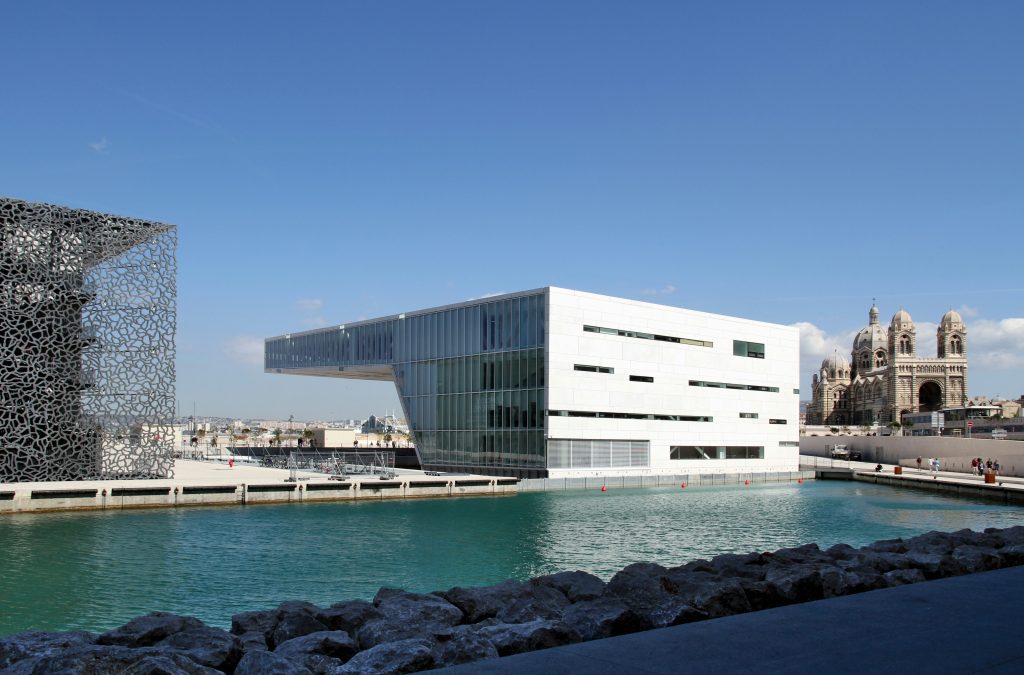
Down by the water, Mucem is the strongest rainy-day choice. The permanent and temporary exhibitions examine Mediterranean history and society, while the footbridges connect the contemporary J4 building to Fort Saint-Jean. From November onward, the museum generally opens from 10 AM to 6 PM and closes on Tuesdays and December 25.
Use clear weather for the city’s viewpoints
Notre-Dame de la Garde gives you the full geography lesson: the red roofs below, the Frioul Islands offshore and limestone ridges behind the city. Bus 60 removes the steepest part of the climb, although the final approach remains uphill. Go early if the forecast is bright because winter cloud often thickens later in the afternoon.
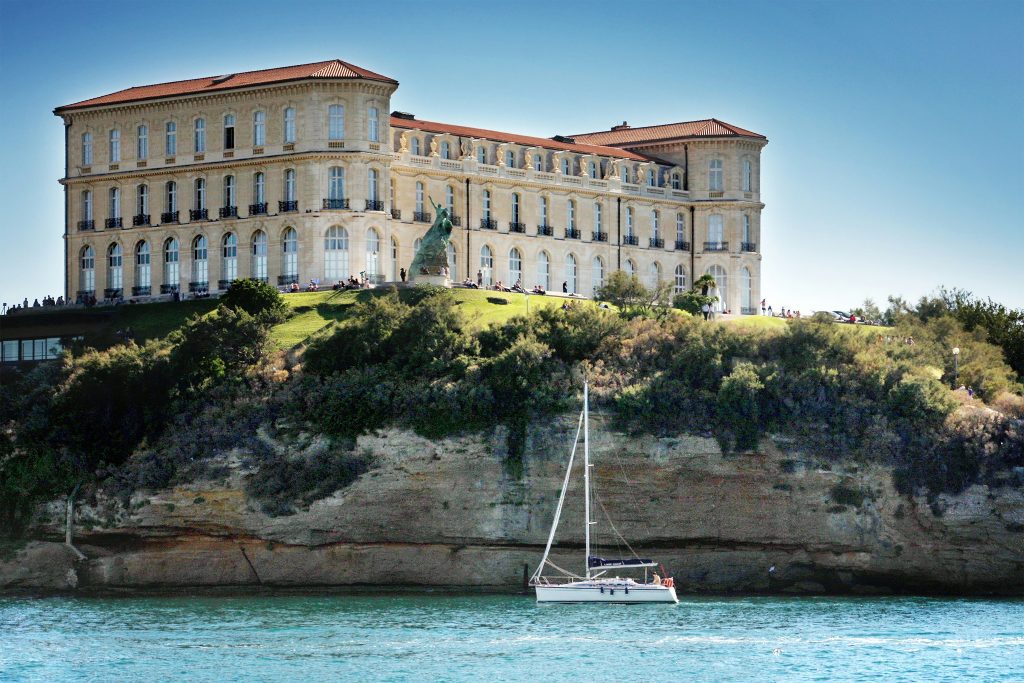
For a flatter walk, cross the Old Port to Palais du Pharo and continue toward Plage des Catalans. The Corniche Kennedy then traces the sea past rocky bathing spots and Vallon des Auffes, a tiny fishing inlet tucked below the road. Sunset comes early, so avoid leaving this route until late afternoon.
Keep a serious rain plan
Cosquer Méditerranée recreates the submerged prehistoric Cosquer Cave inside Villa Méditerranée, next to Mucem. It works particularly well for families because the cave section is experienced from small moving modules. Another option is Palais Longchamp, where the Fine Arts Museum and Natural History Museum sit behind an ornate water palace.
If the rain is short, wait it out over coffee around Cours Julien and look at the street art afterward. For more ideas beyond the seasonal essentials, save this guide to things to do in Marseille before leaving.
Are the Calanques worth visiting in winter?
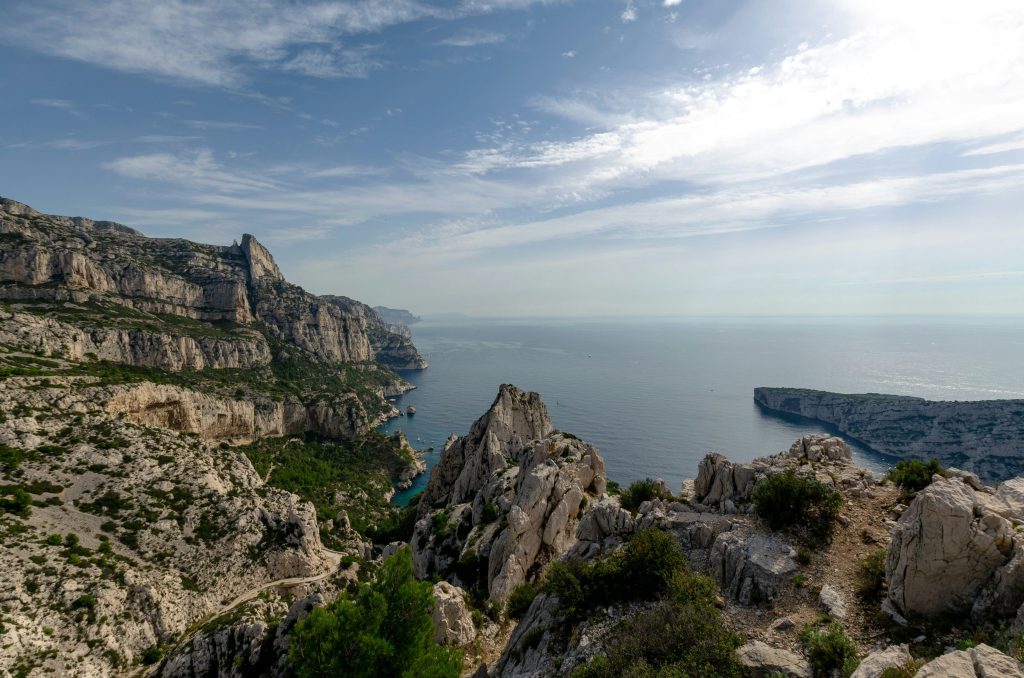
Yes, winter is one of the best seasons for walking in the Calanques. The heat and summer fire restrictions are absent, trails are quieter, and the low sun sharpens the contrast between white limestone and dark blue water. Entry to the national park is free.
The catch is weather. Limestone becomes slippery after rain, exposed ridges feel severe in a mistral, and phone reception can disappear between cliffs. Carry water because seasonal kiosks may be closed, download your route in advance and wear proper walking shoes rather than smooth city sneakers.
- Choose the Sugiton viewpoint area from Luminy if you want a manageable half-day with broad coastal views.
- Save En-Vau for experienced walkers with enough daylight. The commonly used route via Port-Miou and Port-Pin is around 13 kilometers return and includes rough, steep ground.
- Skip cliff paths during strong wind or heavy rain. A waterfront walk inside Marseille is the sensible replacement.
- Do not rely on finding food, water or an open restroom once you are deep inside the park.
Boat trips can be worthwhile, but they are less predictable. Licensed operators offer winter departures from the Old Port, yet rough seas can cause same-day cancellations. Check the forecast and the official guidance for visiting the Calanques in winter before paying for a fixed slot.
The Mediterranean usually sits around 13–15°C during winter. Locals do swim year-round, especially on calm mornings, but this is cold-water swimming rather than a casual beach break. A wetsuit, warm change of clothes and experience in low water temperatures are sensible requirements.
A practical two-day winter itinerary
This plan keeps outdoor stops in daylight and avoids crossing the city repeatedly. Swap the two afternoons if rain or strong wind arrives.
| Time | Day one: historic Marseille | Day two: views and the coast |
|---|---|---|
| Morning | Vieux-Port fish market, Le Panier lanes and Vieille Charité | Notre-Dame de la Garde, reached on bus 60 or on foot |
| Lunch | Panisse, pizza or North African food around Noailles | A casual lunch near the Old Port or Saint-Victor |
| Afternoon | Cathédrale de la Major, Mucem and Fort Saint-Jean | Palais du Pharo, Catalans beach and Vallon des Auffes |
| Evening | Cours Julien for bars, small restaurants and live music | Dinner near La Joliette, Le Panier or the Old Port |
Day one
Reach the Vieux-Port in time to see the morning fish stalls, then enter Le Panier via the Town Hall side of the harbor. This direction tackles most of the climbing before lunch. At Vieille Charité, use the courtyard as a short stop or spend longer inside if the weather turns.
Cross toward Noailles for lunch rather than paying for the most prominent harbor terraces. The streets around Marché des Capucins are strong for affordable produce, Tunisian snacks, couscous and simple plates. Return north through the center for Cathédrale de la Major, then spend the afternoon between Mucem and Fort Saint-Jean.
Cours Julien works well after dark because restaurants, music venues and bars are concentrated within a compact area. Metro line M2 serves nearby Notre-Dame du Mont. Check evening service notices before staying late because engineering work can alter metro closing times.
Day two
Put Notre-Dame de la Garde first, when visibility is usually at its best. From the basilica, descend toward Saint-Victor Abbey instead of returning along the same streets. Pick up orange-blossom navettes nearby, then continue to the southern edge of the harbor.
The afternoon coastal stretch can be shortened at several points. Palais du Pharo is enough for a quick panorama, Plage des Catalans adds a beach stop, and Vallon des Auffes gives you the prettiest finish. Frequent buses run along the Corniche when cold wind makes walking less appealing.
How to reach Marseille and get around
From the airport, the A1 coach runs directly to Marseille Saint-Charles. The scheduled average travel time is 25 minutes, with departures every 10 minutes for much of the day, though road traffic can lengthen the ride. Trains also connect the airport area with Saint-Charles, using a transfer bus between the terminals and Vitrolles station.
Marseille’s center is compact enough for walking, but hills change the calculation. Metro M1 is useful for Vieux-Port and Palais Longchamp, while M2 connects Saint-Charles, Joliette and Cours Julien’s nearest stop. Bus 60 serves Notre-Dame de la Garde, and buses 83 and 82 cover useful sections of the waterfront.
- Use a day or multi-day transport pass when the plan includes several bus and metro trips.
- Validate the correct ticket or pass when required, even after changing vehicles.
- Allow extra time on rainy days because surface traffic slows quickly.
- Check the RTM network before late-night trips, especially during metro modernization work.
Hiring a car is unnecessary for a short city break. Central parking is limited, traffic can be demanding, and public transportation reaches the main neighborhoods. A car only starts to earn its keep if Marseille is part of a longer Provence route.
Marseille in winter: the local guide FAQs
Is Marseille worth visiting in winter?
Marseille is worth visiting in winter for mild afternoons, quieter museums and open coastal paths. Average daytime highs are close to 12°C, while nights can fall toward 4°C.
What is Marseille like in January?
Marseille in January has the quietest streets and uncrowded cultural sites. Average temperatures are about 12°C by day and 4°C at night, with daylight increasing from roughly 9 to almost 10 hours.
What can you do in Marseille in December?
Marseille in December offers Provençal Christmas traditions, santons around the Old Port and decorated streets. Sainte-Barbe begins on December 4, and the 224th Santon Fair runs from November 14, 2026, to January 3, 2027.
What is the best rainy-day activity in Marseille?
Mucem is a strong rainy-day choice, with exhibitions on Mediterranean history and society beside the Old Port. From November onward, it generally opens from 10 AM to 6 PM, closes on Tuesdays and is closed on December 25.
Are the Calanques worth visiting in winter?
The Calanques are worth visiting in winter because trails are quieter and summer fire restrictions are absent. The Sugiton viewpoint area from Luminy suits a manageable half-day walk, but limestone can become slippery after rain.
How do you get to Notre-Dame de la Garde?
Bus 60 removes the steepest part of the climb to Notre-Dame de la Garde. The final approach remains uphill, so shoes with good grip are useful in wet winter weather.
What should you pack for Marseille in winter?
Pack layers, a warm jacket, a windproof layer and a compact umbrella for Marseille in winter. Add gloves for boat trips and shoes with good grip, since the mistral can make the waterfront feel brisk and rain can make limestone slippery.
How many days do you need in Marseille in winter?
A 2-3 day break is enough for Le Panier, the Old Port, Mucem and one sea-facing escape. Use one clear-weather stretch for the Corniche Kennedy or Calanques, then keep a museum plan ready for rain or strong wind.