

Vienna is one of Europe’s great food cities, and it has the classics to prove it. If you’re wondering what to eat in Vienna, start here: Wiener Schnitzel, Sachertorte, Tafelspitz, and fresh-baked Kipferl are just a few of the must-try dishes waiting for you. Whether you’re grabbing a sausage at a street stand or settling in at a traditional coffee house, Vienna’s food scene delivers something memorable at every turn.
Ready to eat your way through the Austrian capital?
Here’s everything you need to know
🍽️ 🥩 🎂
What is Vienna famous for eating?
Vienna is famous for its rich, hearty cuisine: rooted in Central European traditions and elevated over centuries of culinary culture. The city gave the world Wiener Schnitzel, the Sachertorte, and the Viennese coffee house, all of which are recognized globally as icons of Austrian food culture.
But Vienna’s food scene goes well beyond the greatest hits. Markets overflow with local produce, sausage stands line the streets, and Viennese bakeries turn out incredible pastries every morning. It’s a city where eating well is part of everyday life: not a special occasion.
What is the most popular food in Austria?
Austria’s most popular and best-known dish is Wiener Schnitzel: a thin, breaded veal cutlet fried until golden and served with a slice of lemon and a side of potato salad or parsley potatoes. It’s simple, satisfying, and done to perfection in Vienna.
Other iconic Austrian dishes include:
- Tafelspitz: slow-boiled beef served with broth, root vegetables, horseradish, and apple sauce
- Gulasch: a rich, paprika-heavy beef stew with strong Hungarian roots, beloved in Vienna
- Kaiserschmarrn: a fluffy, shredded pancake dusted with powdered sugar and served with plum sauce
- Apfelstrudel: thin pastry rolled around spiced apple and raisin filling, best eaten warm
Austria is also internationally known for its pastry culture. Strudels, Kipferls, and Gugelhupf cakes are deeply woven into everyday Viennese life.
What is traditional food in Vienna?
Traditional Viennese food reflects the city’s history as the heart of the Austro-Hungarian Empire: a melting pot of Central European culinary influences. You’ll find Hungarian stews, Czech dumplings, and Italian-inspired pastries all folded into what is now distinctly Viennese cuisine.
Here are the traditional Vienna foods you absolutely need to try:
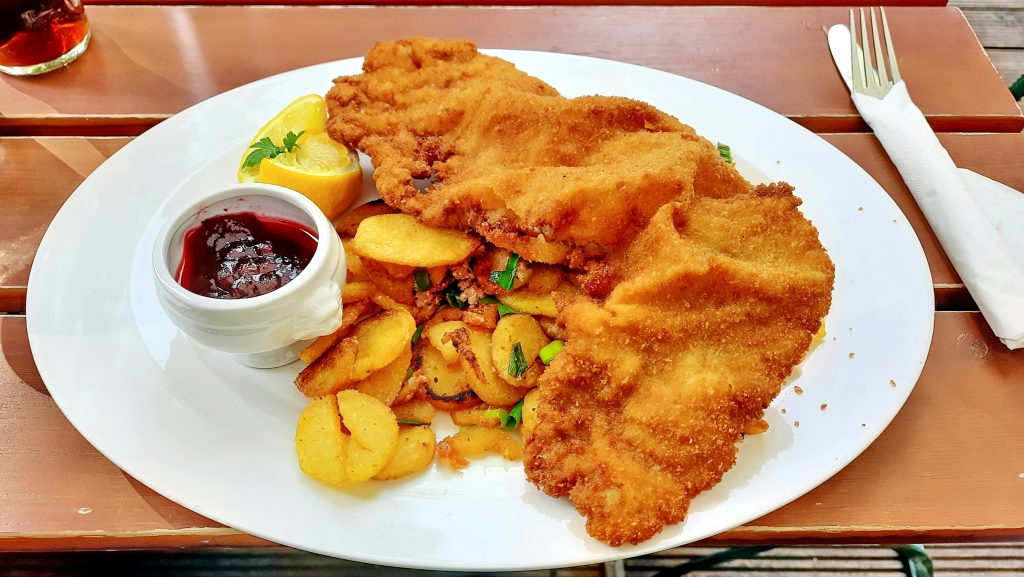
Wiener Schnitzel
The most famous dish in Vienna. Authentic Wiener Schnitzel is made from veal. If it’s pork, it’s technically called Schnitzel Wiener Art (Viennese-style schnitzel). Either way, you’ll find it on almost every menu in the city, and the quality is consistently excellent.
Tafelspitz
Often considered the true Viennese Sunday dish, Tafelspitz is boiled beef cooked low and slow in broth with root vegetables. It’s served with creamy spinach, potato rosti, and two traditional sauces: horseradish cream and apple horseradish. Emperor Franz Joseph I reportedly ate it every day, which tells you everything you need to know.
Gulasch
Vienna’s version of gulasch is a thick, paprika-rich beef stew served with bread or Semmelknödel (bread dumplings). It’s the ultimate comfort food and one of the most popular dishes in the city’s traditional taverns, known as Beisls.
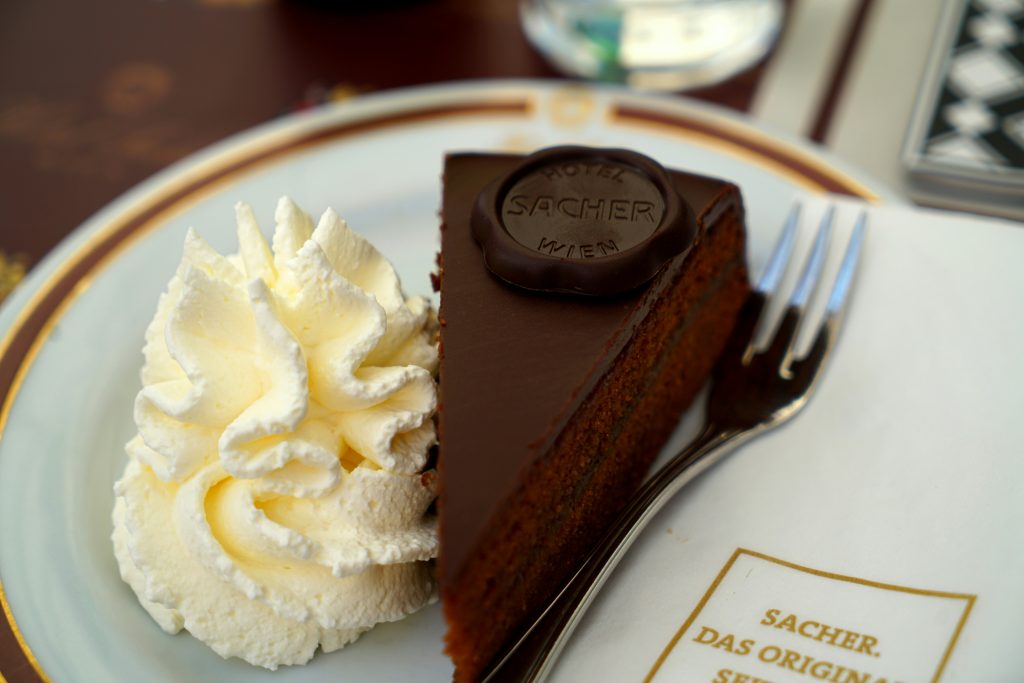
Sachertorte
The Sachertorte is arguably the most famous cake in the world. Created in 1832 by Franz Sacher, it’s a dense chocolate cake with a layer of apricot jam, covered in dark chocolate glaze. The Hotel Sacher and Café Demel have been locked in a friendly debate over who makes the “original” for decades. Our advice? Try both and decide for yourself.
Apfelstrudel
A staple of Viennese coffee houses. Thin pastry wrapped around cinnamon apple filling, raisins, and breadcrumbs, baked until golden and served warm with vanilla sauce or a dollop of whipped cream. Simple, comforting, and unforgettable.
Kaiserschmarrn
Literally “Emperor’s mess,” this fluffy, torn-up pancake was supposedly a favorite of Emperor Franz Joseph I. It’s sweet, light, and served with powdered sugar and plum compote. Order it for dessert: or, honestly, as a main course. No judgment.
What is a traditional breakfast in Vienna?
A traditional Viennese breakfast is a proper ritual. Forget grabbing a coffee on the go: in Vienna, breakfast is a sit-down affair, best enjoyed in one of the city’s legendary coffee houses.
A classic Viennese breakfast typically includes:
- Kipferl: a crescent-shaped roll, soft inside with a golden crust. The ancestor of the French croissant
- Semmel: a round, crusty bread roll that’s a daily staple in every Austrian household
- Butter and jam: always, and in generous portions
- Aufschnitt: a selection of cold cuts and cheese
- A soft-boiled egg
- Coffee: Melange (espresso with steamed milk), Verlängerter (long black), or Kleiner Brauner (small espresso with a dash of cream)
Many Viennese coffee houses still serve a full breakfast set that looks like this, and taking your time over it is practically a cultural expectation. The Viennese coffee house tradition is even UNESCO-listed as an Intangible Cultural Heritage: so yes, breakfast here is officially a big deal.
Why are Vienna sausages so popular?
Vienna sausages, known locally as Frankfurter or Wiener, are one of the most iconic street foods in the city. And their popularity comes down to a combination of quality, simplicity, and tradition.
A few reasons they’ve stood the test of time:
They’re genuinely delicious
Made from finely ground pork and beef with a natural casing, they have a distinct smoky flavor that’s hard to replicate.
They’re everywhere
Vienna’s Würstelstand (sausage stands) are as much a part of city life as the coffee houses. You’ll find them on street corners, near U-Bahn stations, and in markets: open late, always busy.
They’re deeply embedded in Viennese culture
The Würstelstand is a social institution. It’s where locals grab a quick snack after a night out, debate football, and catch up with the neighborhood.
The most popular varieties to try:
| Sausage | Description |
|---|---|
| Frankfurter | The classic: pork and beef, served in a bread roll with mustard |
| Käsekrainer | Pork sausage stuffed with cheese: locals love it |
| Burenwurst | A thicker, coarser sausage, sliced and served with bread and horseradish |
| Leberkäse | Not actually a sausage, but a baked meatloaf served in a roll: extremely popular |
Where to eat in Vienna: the best spots
Naschmarkt
Vienna’s most famous open-air market runs along the Linke Wienzeile and is the best place to graze your way through Austrian food culture. You’ll find fresh produce, pickles, cheeses, olives, and a rotating selection of food stalls serving everything from grilled meats to falafel wraps. Go on a Saturday morning when the flea market is also running: it’s a full experience.
Traditional Viennese coffee houses
Vienna’s coffee house culture is world-famous for a reason. These are places where time slows down: marble tables, newspapers on wooden holders, waiters in black waistcoats, and exceptional cake. The most iconic include:
☕ Café Central: a stunning historic venue in the Palais Ferstel, where Freud and Trotsky once sat
🍰 Café Landtmann: a Viennese institution right next to the Burgtheater
🍵 Café Schwarzenberg: one of the oldest coffee houses on the Ringstrasse
Beisls (traditional Viennese taverns)
A Beisl is Vienna’s answer to the neighborhood tavern: a relaxed, unpretentious spot serving hearty traditional food. These are where you’ll find the best Wiener Schnitzel, Tafelspitz, and Gulasch, made the way locals actually eat it. Ask the hotel team for their favorite one in the area: local knowledge always wins.
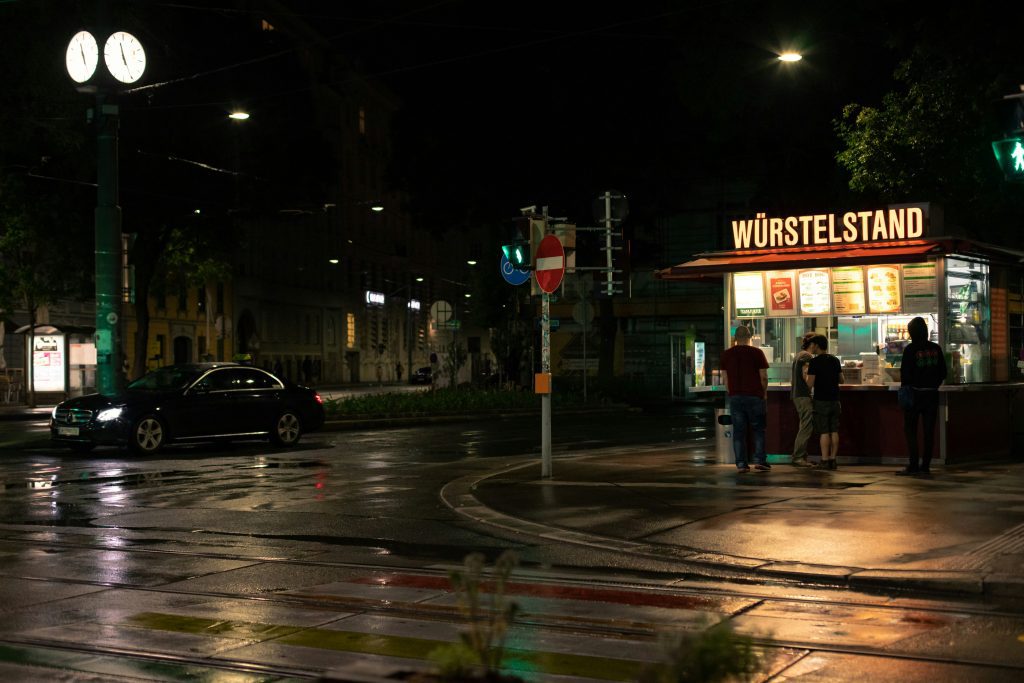
Würstelstand (sausage stands)
Don’t leave Vienna without eating at a street sausage stand at least once. The best time? Late evening, when the city is buzzing and the lines prove the quality. Order a Käsekrainer with senf (mustard) and a bread roll, and enjoy it standing up: that’s the Viennese way.
What to eat in Vienna: the essential guide FAQs
What is famous to eat in Vienna?
Vienna is best known for Wiener Schnitzel (breaded veal cutlet), Sachertorte (chocolate cake with apricot jam), Apfelstrudel (apple pastry), Tafelspitz (boiled beef), and Kaiserschmarrn (shredded pancake). These dishes are rooted in Austro-Hungarian culinary history and still served daily across the city's restaurants, coffee houses, and taverns.
What is a traditional breakfast in Vienna?
A traditional Viennese breakfast includes fresh bread rolls (Kipferl and Semmel), butter, jam, cold cuts, cheese, a soft-boiled egg, and coffee. It's best enjoyed slowly in one of Vienna's famous coffee houses, where the Melange (espresso with steamed milk) is a staple. Vienna's coffee house culture is UNESCO-listed as an Intangible Cultural Heritage.
Why are Vienna sausages so popular?
Vienna sausages, called Frankfurter or Wiener locally, are popular because of their distinctive smoky flavor, high quality, and deep cultural roots. The city's Würstelstand (sausage stands) are a beloved institution, serving locals and travelers alike at all hours. Varieties like the cheese-filled Käsekrainer and the classic Frankfurter are street food icons.
What is the most popular food in Austria?
Wiener Schnitzel is Austria's most internationally recognized dish. Other top picks include Gulasch, Tafelspitz, Sachertorte, Apfelstrudel, and Kaiserschmarrn. Austrian cuisine is hearty, comforting, and built on Central European traditions with strong Hungarian, Czech, and Italian influences.
What food is Vienna known for?
Vienna is known for its coffee house culture, pastries (especially Sachertorte and Apfelstrudel), Wiener Schnitzel, street sausages (Käsekrainer, Frankfurter), and hearty tavern food like Gulasch and Tafelspitz. The city has a strong culinary identity that blends historic tradition with excellent everyday food culture.
Where should I eat in Vienna to try traditional food?
For traditional Viennese food, head to a classic Beisl (neighborhood tavern) for Schnitzel and Gulasch, a coffee house for pastries and breakfast, the Naschmarkt for street food and fresh produce, and a Würstelstand for late-night sausages. Ask the local MEININGER team for their top picks: they know the city inside out.
Is Vienna good for vegetarians?
Vienna is catching up quickly when it comes to vegetarian and vegan options. Coffee houses serve excellent plant-friendly dishes, the Naschmarkt has great variety, and many modern restaurants offer creative meat-free menus. Traditional Viennese cuisine is meat-heavy, but finding good vegetarian food has never been easier in the city.
What is Sachertorte and where can I try it?
Sachertorte is a dense chocolate cake with a thin layer of apricot jam and a smooth dark chocolate glaze, created by pastry chef Franz Sacher in Vienna in 1832. The two most famous places to try it are the Hotel Sacher (the original) and Café Demel, which both claim their recipe is the authentic one. Try both: it's the most delicious debate in Vienna.
What is Kaiserschmarrn?
Kaiserschmarrn is a traditional Austrian dessert made from a light, fluffy batter cooked in butter, then shredded and caramelized. It's served with powdered sugar and plum or berry compote. The name translates as "Emperor's mess": it was reputedly a favorite of Emperor Franz Joseph I. You'll find it on menus across Vienna, especially in coffee houses and traditional restaurants.
What's the best way to explore Vienna's food scene on a budget?
Vienna's food scene is very accessible without spending a lot. Grab breakfast pastries from a local bakery (Semmel and Kipferl cost less than €1), eat at the Naschmarkt where fresh food is plentiful and affordable, and make the most of the Würstelstand for quick, cheap, and genuinely good street food. A Käsekrainer with bread and mustard is one of the best value snacks in any European city.